


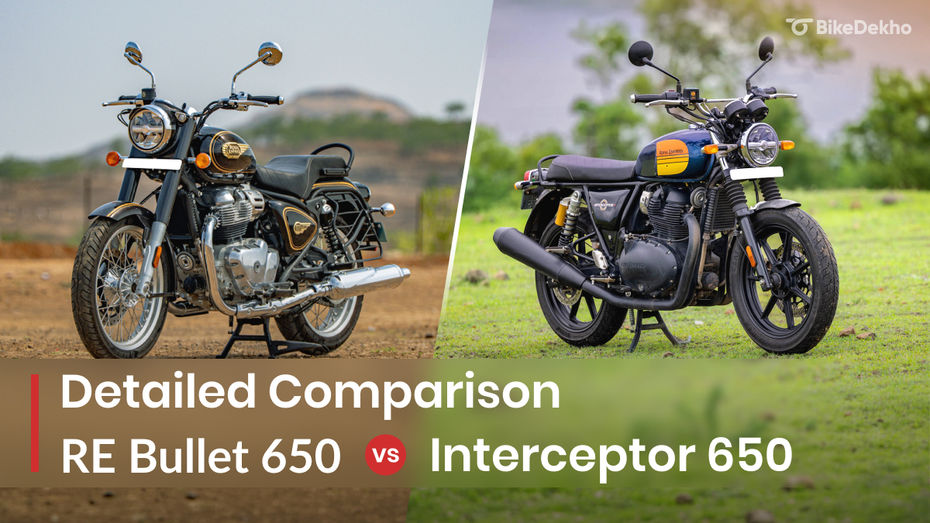
The 650cc segment has become one of the most important spaces for Royal Enfield, offering a blend of accessible performance, strong road presence, and everyday usability. Within this segment, the Royal Enfield Bullet 650 and the Royal Enfield Interceptor 650 represent two very different interpretations of the same platform.
While both motorcycles share the same engine and other mechanical components, they cater to entirely different audiences. The Bullet 650 leans heavily into legacy, classic styling, and a more laid-back riding experience. The Interceptor 650, on the other hand, is designed as a modern retro roadster, focusing on versatility, lighter handling, and a more engaging ride.
On paper, both bikes appear closely matched in terms of power and torque output. However, when you look deeper into their dimensions, hardware, weight, and overall design philosophy, clear differences begin to emerge.
Let’s take a detailed look at how these two Royal Enfield motorcycles stack up against each other on paper:
Price & Variants
|
Royal Enfield Bullet 650 |
Royal Enfield Interceptor 650 |
||
|
Colours |
Ex-showroom Price |
Colours |
Ex-showroom Price |
|
Cannon Black |
Rs 3,64,856 |
Canyon Red |
Rs 3,35,394 |
|
Battleship Blue |
|||
|
Cali Green |
|||
|
Sunset Strip |
Rs 3,44,254 |
||
|
Black Ray |
Rs 3,55,322 |
||
|
Mark 2 |
Rs 3,66,390 |
||
- Pricing is one of the most defining differences between these two motorcycles. The Royal Enfield Interceptor 650’s prices start at Rs 3.35 lakh (ex-showroom), making it significantly more affordable than the Bullet 650, which is priced at Rs 3.64 lakh, the same as the top-end Mark 2 variant of the Interceptor 650.
-
This price difference of nearly Rs 30,000 between the entry-level variant of the Interceptor and the Bullet 650 immediately positions the Interceptor 650 as the more value-oriented option within the 650cc lineup.
-
The Bullet 650, despite sharing a similar engine and platform, commands a premium due to its iconic branding, design heritage, and niche positioning as a larger-capacity Bullet.
-
The multiple variants of the Interceptor 650 give buyers more flexibility in terms of aesthetics and budget.
Dimensions & Design
|
Specifications |
Royal Enfield Bullet 650 |
Royal Enfield Interceptor 650 |
Difference |
|
Wheelbase |
1,480mm |
1,398mm |
– 18mm |
|
Ground clearance |
154mm |
174mm |
– 20mm |
|
Fuel tank capacity |
14.8 litres |
13.7 litres |
+ 1.1 litres |
|
Seat height |
800mm |
804mm |
– 4mm |
|
Kerb weight |
243kg |
218kg |
+ 25kg |
- The most striking difference here is weight. At 243kg, the Bullet 650 is significantly heavier than the Interceptor 650, which weighs 218kg. A 25kg difference is substantial and directly impacts handling, manoeuvrability, and overall ease of riding.
-
The Bullet 650’s longer wheelbase contributes to greater straight-line stability, making it better suited for relaxed cruising. However, it also reduces agility, especially in tight city environments or when ridden in a spirited manner.
-
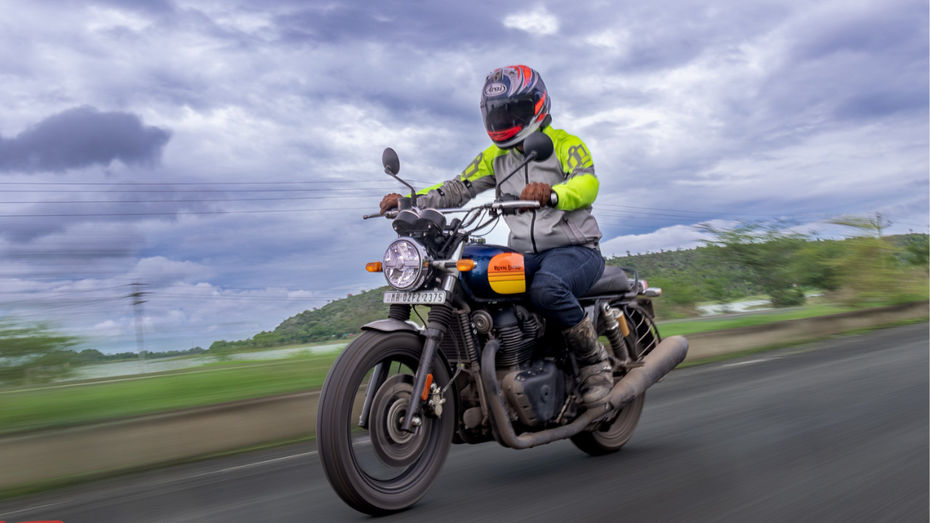
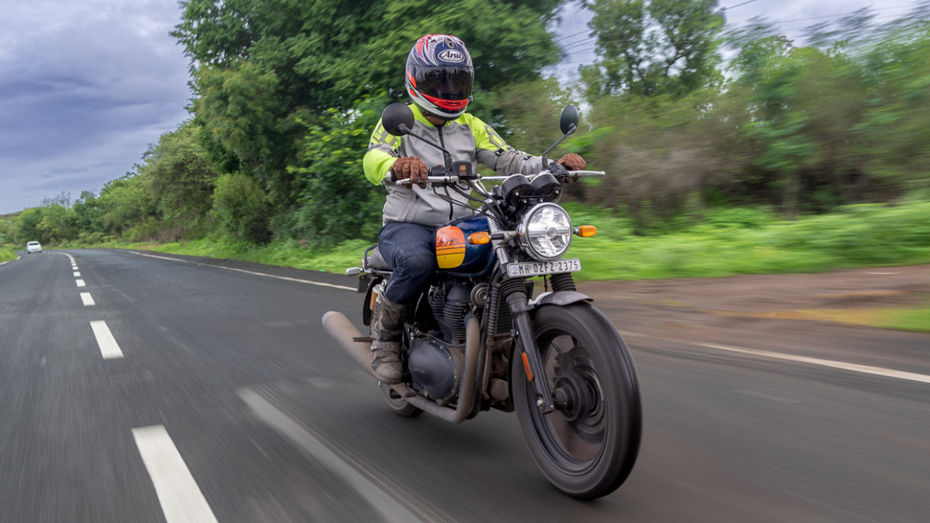
The Interceptor 650, with its shorter wheelbase and significantly lighter weight, is far more agile and responsive to ride. This makes it easier to handle in city traffic and more engaging on twisty roads.
-
Ground clearance is another major advantage for the Interceptor 650, with a 20mm higher clearance. This makes it more practical for Indian road conditions, where speed breakers and uneven surfaces are common.
-
The Bullet 650 offers a slightly larger fuel tank, which could translate into a marginally better touring range.
-
Seat heights are nearly identical, ensuring both bikes remain accessible to riders of all heights.
-
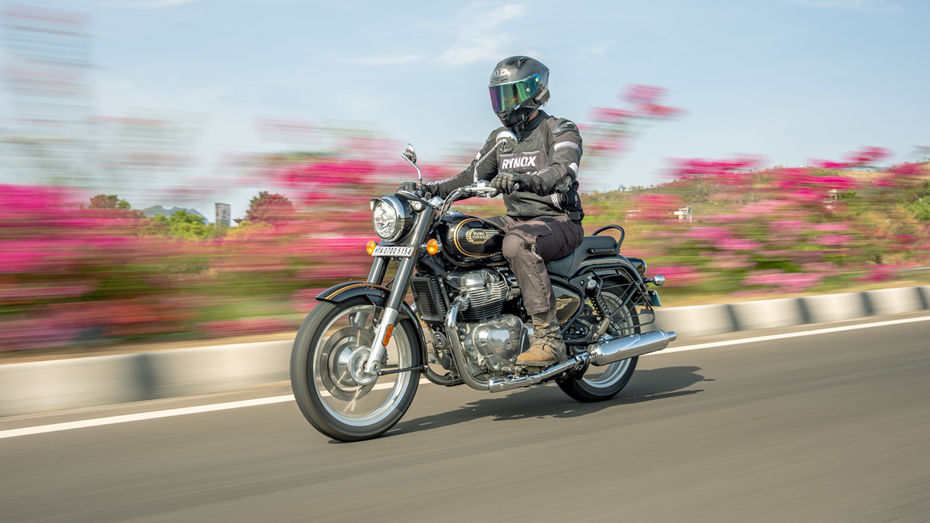
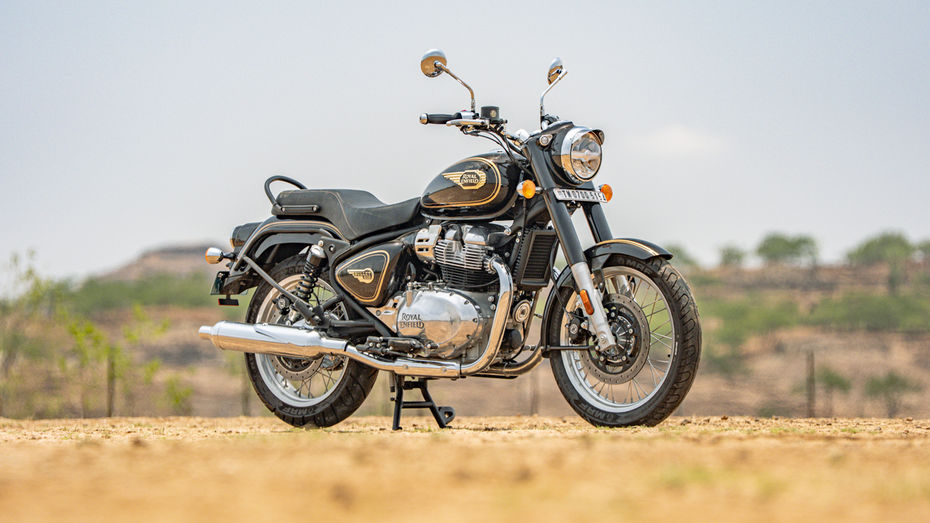
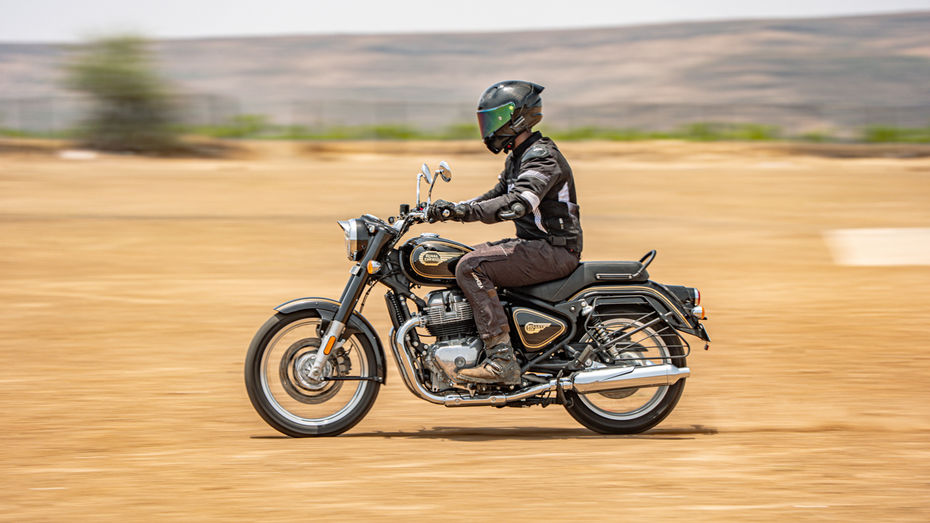
In terms of looks, the Bullet 650 stays true to the classic Bullet design language, with a long, flowing silhouette, round headlamp, and peashooter exhausts. It is clearly aimed at riders who value heritage and presence over outright performance.
-
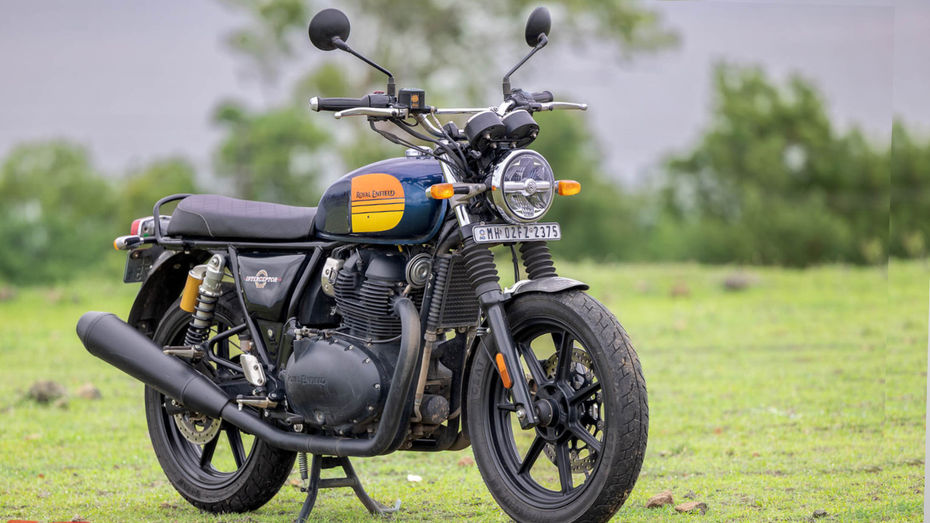
The Interceptor 650 adopts a more neo-retro approach, with cleaner lines, a sportier stance, and a more compact overall design. It feels more contemporary while still retaining the charm of a retro roadster.
Underpinnings
|
Specifications |
Royal Enfield Bullet 650 |
Royal Enfield Interceptor 650 |
|
Front suspension |
Telescopic fork |
Telescopic fork |
|
Rear suspension |
TTwin shock absorbers |
Twin shock absorbers |
|
Front brake |
320mm disc brake |
320mm disc brake |
|
Rear brake |
300mm disc brake with dual-channel ABS |
240mm disc brake with dual-channel ABS |
|
Front tyre |
100/90-19” |
100/90-18” |
|
Rear tyre |
140/70 – 18” |
130/70 – 18” |
- Both motorcycles use a similar suspension setup, but the Bullet 650’s setup is a bit on the softer side to suit its identity as a cruiser.
-
The Interceptor 650, while mechanically similar, has a stiffer setup, ideal for agile handling and having fun on the mountain twisties.
-
The Bullet 650’s larger rear disc brake suggests stronger braking performance, especially under load or during highway riding.
-
Tyre profiles also differ slightly, with the Bullet 650 using a wider rear tyre, which should lead to improved stability on straight roads but could slightly reduce agility.
-
The Interceptor’s smaller front wheel (18-inch vs 19-inch) contributes to quicker steering response and better cornering dynamics.
Features
|
Specifications |
Royal Enfield Bullet 650 |
Royal Enfield Interceptor 650 |
|
LED headlight |
Yes |
Yes |
|
Bluetooth connectivity |
Yes |
Yes |
|
USB charging |
Yes |
Yes |
|
Instrument Console |
Analogue speedometer with a digital display |
Twin pod, with a digital inset |
- Both motorcycles offer a very similar feature set, and this is one area where neither bike has a clear advantage.
-
Bluetooth connectivity and USB charging are practical additions, improving everyday usability. Bluetooth connectivity for call/SMS alerts and turn-by-turn navigation is available on both bikes through the Tripper navigation pod as an accessory.
-
The Interceptor 650 has a twin-pod instrument console – with a round analogue tachometer on the right and a round analogue speedometer on the left. The latter has a digital inset that shows fuel gauge, trip meter, and odometer readings.
-
The Bullet 650 has a round, analogue speedometer with a small LCD screen below it that shows fuel gauge, gear position indicator, odometer, and tripmeter readings.
In terms of features, both bikes remain relatively basic compared to more modern motorcycles. However, this simplicity aligns well with their retro positioning.
Performance
|
Specifications |
Royal Enfield Bullet 650 |
Royal Enfield Interceptor 650 |
|
Engine |
648cc, inline twin-cylinder engine |
648cc, inline twin-cylinder engine |
|
Power |
47PS at 7,250rpm |
47PS at 7,250rpm |
|
Torque |
52.3Nm at 5,650rpm |
52.3Nm at 5,150rpm |
|
Gearbox |
6-speed |
6-speed |
- Both motorcycles are powered by the same engine, producing similar power and torque figures. However, there’s a difference in how the engine is tuned – the Interceptor feels slightly quicker than the Bullet, which feels easy.
-
The Bullet 650, with its heavier weight and longer wheelbase, is likely to feel more relaxed, making it better suited for cruising.
-
The Interceptor 650, thanks to its lighter weight and slightly sharper tuning, offers a more engaging riding experience, especially when accelerating or cornering.
-
Both bikes have a 6-speed gearbox, ensuring smooth highway cruising and good fuel efficiency.
Verdict
The Royal Enfield Bullet 650 and the Royal Enfield Interceptor 650 may share a common engine platform, but they are designed with very different riders in mind.
The Bullet 650 is a motorcycle that prioritises heritage, presence, and a relaxed riding experience. Its heavier build, longer wheelbase, and classic styling make it ideal for riders who value tradition and a laid-back cruising character. It is not about outright performance or agility, but about the experience of riding a motorcycle that carries forward a legacy.
The Interceptor 650, on the other hand, is a far more versatile and dynamic motorcycle. It is lighter, more agile, and better suited for both city riding and highway touring. It offers better ground clearance, improved handling, and a more engaging ride overall.
From a value perspective, the Interceptor 650 clearly stands out. It is more affordable, more practical, and more fun to ride in most scenarios. It is the better choice for riders who want a well-rounded motorcycle that can handle a variety of conditions.
However, the Bullet 650 will appeal to riders who prioritise timeless design, heritage, and big road presence. For such buyers, the premium price may be justified.
Rivals
Royal Enfield Classic 650: The Royal Enfield Bullet 650 is more affordable, but the Classic 650 is available in more vibrant colour options.
BSA Gold Star 650: The Bullet 650 offers the smoothness of an inline twin-cylinder engine but the BSA Gold Star 650 is more affordable.