





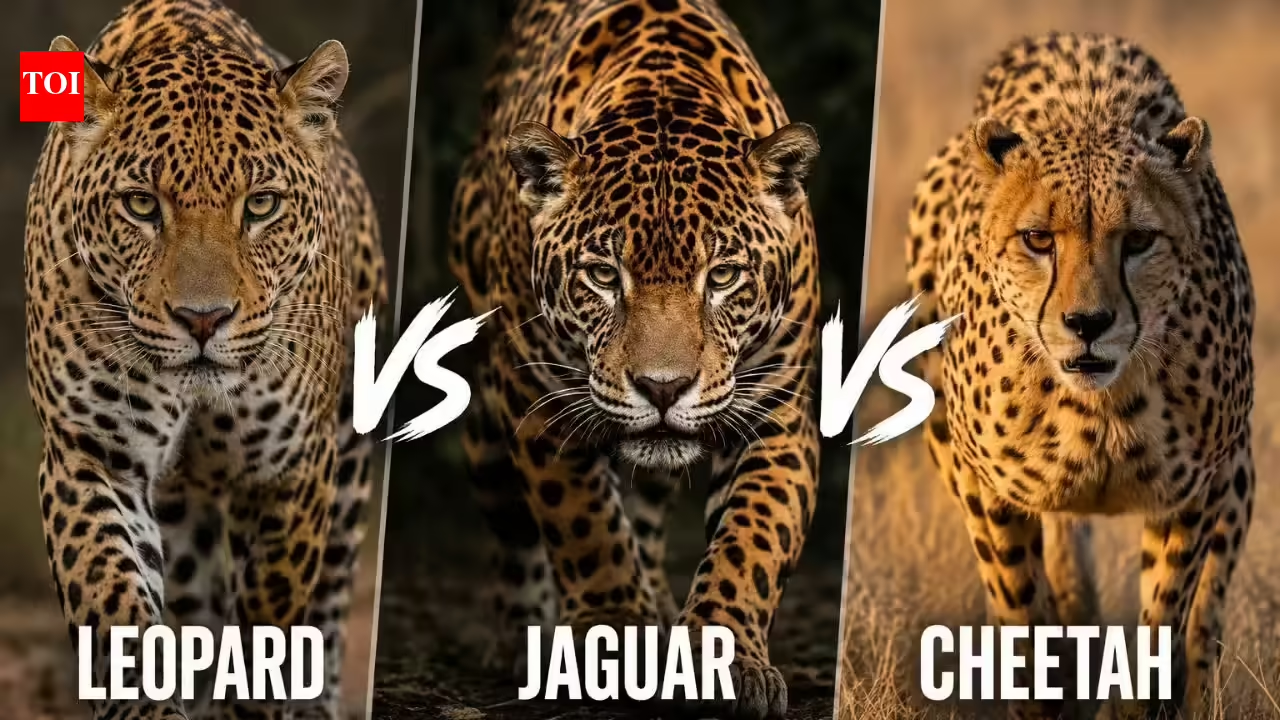
At first glance, a leopard, a cheetah and a jaguar can appear surprisingly similar. All three carry spotted coats, belong to the cat family and occupy the role of predator within their ecosystems. Look a little closer, though, and the differences begin to emerge. One is built for explosive speed across open plains. Another thrives through stealth and adaptability in environments ranging from forests to semi-deserts. The third combines immense power with an unusual fondness for water and dominates landscapes across the Americas.Their hunting styles, physical build, behaviour and habitats reveal three very different evolutionary paths. While each has developed traits suited to its own environment, comparing them side by side highlights how varied the world’s big cats can be despite sharing a familiar appearance.
Leopard vs Jaguar vs Cheetah : Comparing the strength, speed and survival
Key differences between Leopard, Cheetah and Jaguar
Geographic rangeThe leopard occupies the widest distribution of the three. It can be found across large parts of Africa and still survives in sections of Asia. This broad range reflects its ability to adapt to very different landscapes and climates.Cheetahs are far more restricted. Their strongest populations remain in eastern and southern Africa, while jaguars are entirely confined to the Americas. From Mexico to parts of Argentina, the jaguar remains the dominant native big cat across much of its remaining range.Size and weightAlthough leopards often appear large in photographs, they are generally the lightest of the three, alongside some smaller cheetah populations. Adult leopards rarely reach the mass of the biggest jaguars.Jaguars stand apart through sheer bulk. Mature males can exceed 100 kilograms and possess a dense, compact frame. Cheetahs may occasionally rival leopards in weight, but their bodies are built for speed rather than strength, making them appear considerably leaner.Body structureThe leopard sits somewhere between the other two. It combines muscular strength with flexibility, allowing it to climb, stalk and drag prey into trees.A cheetah’s frame is noticeably different. Long limbs, a deep chest, flexible spine and lightweight build help generate extraordinary acceleration. Jaguars favour power over agility. Broad shoulders, thick limbs and powerful jaws give them one of the strongest physiques among all big cats.SpeedThis category belongs comfortably to the cheetah. It remains the fastest land mammal, capable of reaching speeds that few animals can match over short distances. Such bursts are brief, however, as overheating quickly becomes a limiting factor.Leopards and jaguars can move quickly when necessary, but neither depends on speed to secure food. Both rely far more on concealment and timing than outright pursuit.Hunting strategyLeopards are patient stalkers. They creep close to prey before launching a sudden attack, often under the cover of darkness or dense vegetation.Cheetahs hunt differently. They close the distance gradually before exploding into a sprint. Jaguars favour ambushes from cover and possess enough jaw strength to dispatch prey with a crushing bite. Their method requires precision rather than prolonged pursuit.Habitat preferencesFew big cats match the leopard’s adaptability. It can survive in deserts, forests, mountains, grasslands and even some areas near human settlements.Cheetahs prefer open landscapes where speed provides an advantage. Thick forests offer little room for their specialized hunting style. Jaguars are strongly associated with tropical forests and waterways, although they can also persist in grasslands and drier environments when conditions allow.Climbing and swimmingLeopards are among the finest climbers in the cat family. They frequently haul carcasses into trees to protect meals from lions, hyenas and other scavengers.Cheetahs spend comparatively little time climbing and lack the physical adaptations seen in leopards. Jaguars are capable climbers but are especially notable for their comfort around water. Rivers, lakes and wetlands form an important part of many jaguar territories.Social behaviourAll three species spend much of their lives alone. Leopards maintain territories that may overlap with neighbouring individuals but generally avoid close contact.Cheetahs show a slight departure from this pattern. Groups of related males sometimes remain together in coalitions for extended periods. Jaguars, meanwhile, are strongly solitary and usually interact only during breeding periods.Relationship with humansHuman activity remains a common challenge across all three species. Leopards frequently come into conflict with livestock owners and have long been targeted for their skins and body parts.Cheetahs face similar problems, along with pressure from the illegal exotic pet trade. Jaguars often suffer when forests are cleared for agriculture or development, while retaliatory killings continue wherever livestock losses occur.Conservation outlookThe future of each species depends heavily on maintaining connected habitats and reducing conflict with local communities. Leopards remain relatively widespread but continue to lose ground in parts of their historic range.Cheetahs face particular concern because populations are fragmented across large areas. Jaguars retain strongholds in some regions of the Americas, yet habitat destruction continues to reduce available territory and isolate populations.
Leopard vs jaguar vs cheetah: Breaking down the ultimate big cat battle
In a direct physical confrontation, the jaguar would almost certainly hold the advantage. It is generally the heaviest of the three, possesses the most powerful bite and is built around raw strength rather than speed. Its muscular frame allows it to tackle prey that many other big cats would avoid.The leopard would likely finish second. It combines strength, agility and combat experience gained from defending kills against larger predators. The cheetah, despite being the fastest, is not built for fighting. Its lighter frame and focus on speed make it less suited to prolonged physical encounters. In a hypothetical contest involving all three, the jaguar’s size and power would probably prove decisive.