



A few years before Royal Challengers Bengaluru trusted him with pressure overs in an IPL final, Rasikh Salam Dar was walking away from a cricket trial in Srinagar convinced nothing would come of it.
He had been there before.
Every year, he travelled from Kulgam for trials. Every year, he returned home disappointed. Even making the list of probables seeming like a distant dream.
So when Irfan Pathan, who was overseeing talent identification in Jammu and Kashmir around 2018, asked him to stay back after bowling a few deliveries, Rasikh thought little of it. He picked up his kitbag and began walking away with his cousin Nadeem Dar.
Pathan noticed.
“I had asked him to stay back, but he was leaving,” Pathan told Sportstar. “Later I went and asked him why he was going. He said every year he came for trials and every year nothing happened…”
The response stayed with Pathan.
Having watched dozens of young cricketers, most blended into the crowd. Rasikh did not. There was something about the teenager’s action, wrist position and natural pace that immediately stood out.
Pathan wanted a closer look.
“I spoke to the then CEO of the JKCA (Aasif Bukhari), and managed to get Rasikh included in a series of practice matches involving senior players,” Pathan reminisced.
The youngster wasted little time making an impression. In one of those games, he picked up a hat-trick. For Pathan, however, the wickets were only part of the story.
What interested him was the raw material.
The young fast bowler possessed a strong wrist position and natural movement through the air. “But there were rough edges. He would fall away dramatically in his follow-through, which helped him generate sharp inswing but often compromised his control,” Pathan said.
There was enough promise to warrant patience.
Recognising the difficulties of repeatedly travelling from Kulgam, Pathan pushed for special arrangements. Rasikh was allowed to stay in Srinagar with the senior probables, giving him a stable base from which to train and develop.
The investment was unusual, but Pathan believed the youngster was worth it.
Soon, videos of Rasikh were making their way beyond Kashmir.
One day at an airport, Pathan found himself speaking to Mumbai Indians head scout Rahul Sanghvi. Out came the phone. On it was footage of a teenage fast bowler from Kashmir. “Look at this boy,” Pathan remembers telling him.
The feedback was immediate. By the time IPL trials arrived, Mumbai Indians already knew exactly who Rasikh was.
“He was called for the trials, which was attended by T. A. Sekhar, and even Rohit (Sharma) liked him, and MI was convinced that this boy would be theirs,” Pathan said.
The journey that followed, however, was far from straightforward.
His life changed in June 2019, barely a couple of months after making his debut for Mumbai Indians. Though he went wicketless and conceded runs, the franchise backed him throughout.
After that stint, Rasikh was preparing to travel to England for a tri-series with the India U-19 team when the BCCI banned him following a discrepancy involving the submission of a faulty birth certificate.
From being one of the brightest young talents, the world suddenly came crashing down.
As his cousin Nadeem pointed out: “It was a very tough phase for him. When he returned home in Kulgam, many people felt that it would not be possible for him to bounce back. It was incredibly difficult…”
A first-class cricketer himself, Nadeem understood the challenges. Looking back on those dark days, he believes Rasikh’s determination never wavered.
“For an athlete, who had just started his career, it was very difficult to phase all that, but his family was very supportive…”
For many young cricketers, that might have been the end. Rasikh, however, refused to lose hope. Whenever he returned home, he made it a point to train with Nadeem.
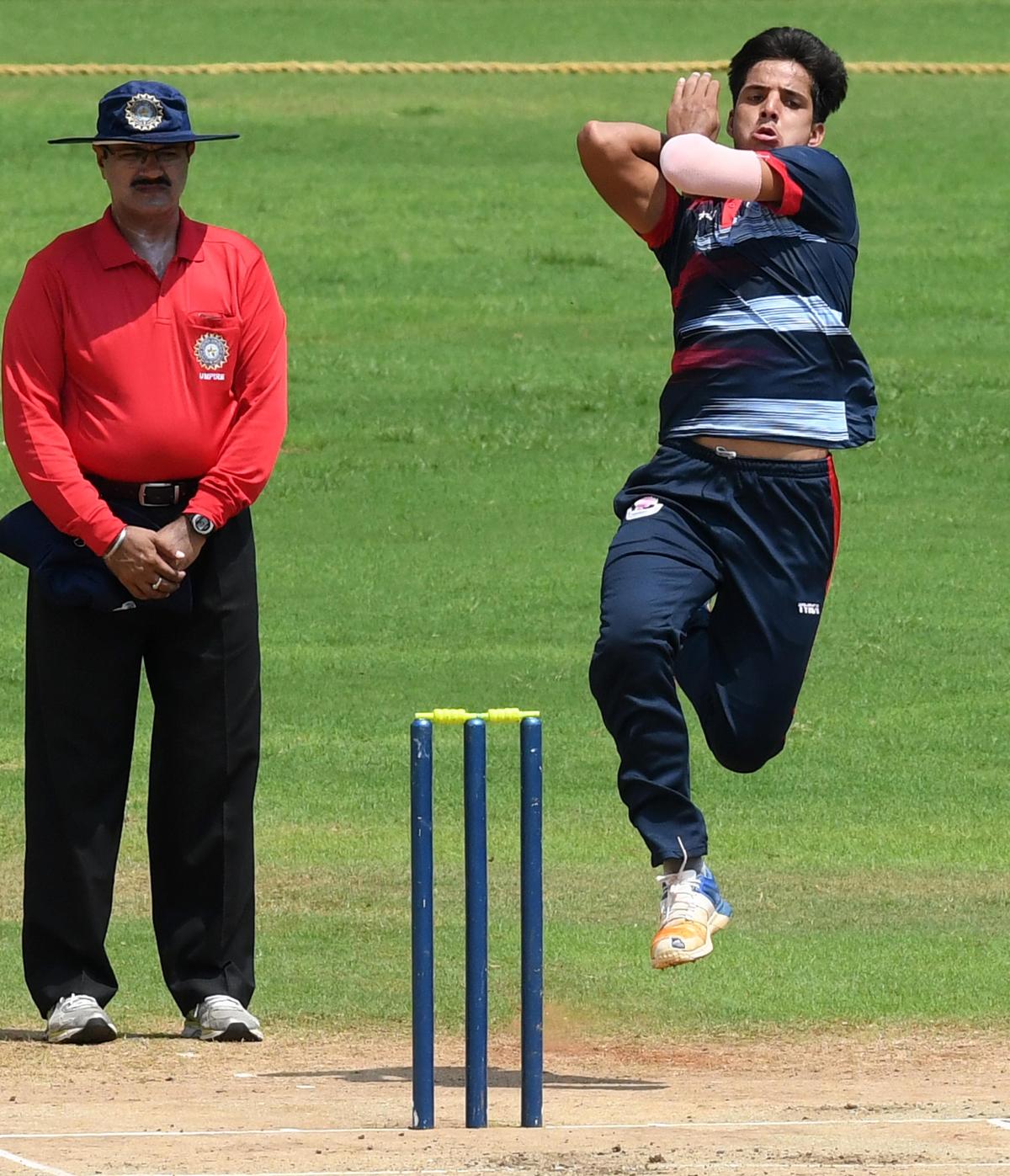
FILE PHOTO: Rasikh moved out of Jammu and Kashmir last year to represent Baroda in domestic cricket.
| Photo Credit:
B. JOTHI RAMALINGAM

FILE PHOTO: Rasikh moved out of Jammu and Kashmir last year to represent Baroda in domestic cricket.
| Photo Credit:
B. JOTHI RAMALINGAM
When he later attended Kolkata Knight Riders trials ahead of the 2022 season, Pathan heard encouraging reports. Coaches and scouts were impressed not only by his bowling but also by his attitude.
Even while competing for a place himself, Rasikh remained engaged with teammates, discussing bowling plans and contributing to conversations around the game. “He was helping other bowlers and staying involved,” Pathan said. “That really impressed people.”
Just when things seemed to be moving in the right direction, another setback arrived. This time, it was injury.
Fast bowlers often talk about pain becoming part of the job. For Rasikh, it became something far more consuming.
Every spell hurt. Every bowling session came with discomfort.
As the problem lingered, it became harder for him to understand what his body was capable of. Rhythm disappeared. Confidence took a hit. The solution required patience.
ALSO READ | Patidar dedicates RCB’s IPL triumph to last year’s stampede victims
Rasikh moved to Bengaluru and spent six months rehabilitating under specialist Ashish Kaushik. It was a lonely period, demanding far more than physical recovery. He was away from home, family and the game he loved.
Pathan believes those months changed him.
“Any rehab teaches you patience,” Pathan said. “Staying away from home for six months and focusing only on recovery is never easy.”
For a young cricketer from Kashmir, there were additional challenges — new surroundings, different routines and unfamiliar food habits.
“Fortunately, he had relatives and acquaintances around Bengaluru who helped make the transition easier. Even so, there were no shortcuts,” Pathan added.
The work had to be done.
While the rehabilitation progressed, technical adjustments continued.
Pathan remained in touch, helping him refine aspects of his action. The focus was on maintaining consistency under pressure.
One recurring issue was his loading position. “At times, he would load differently depending on the situation, causing subtle changes to his action. His non-bowling arm occasionally opened up too early, affecting balance and control,” Pathan said.
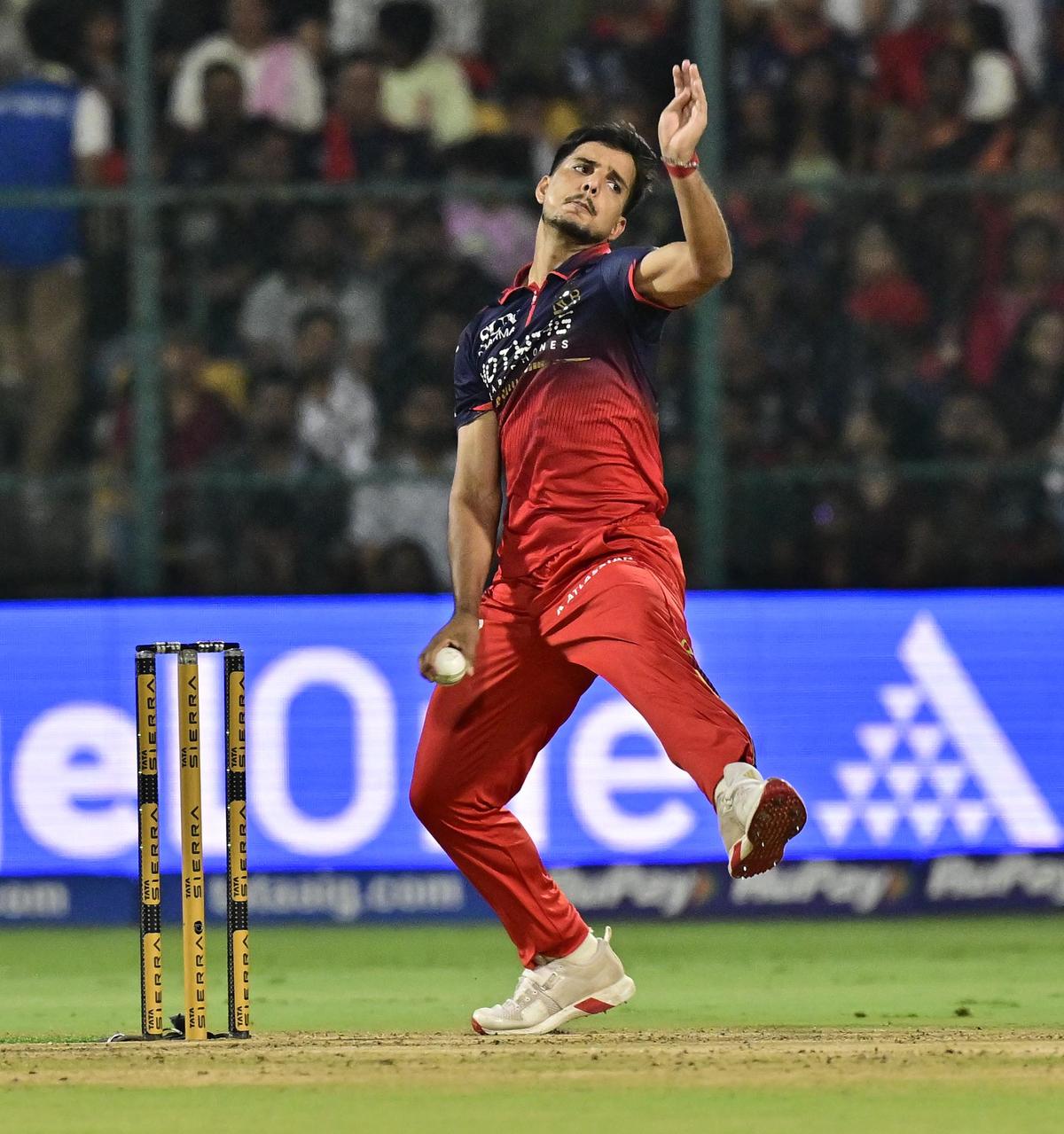
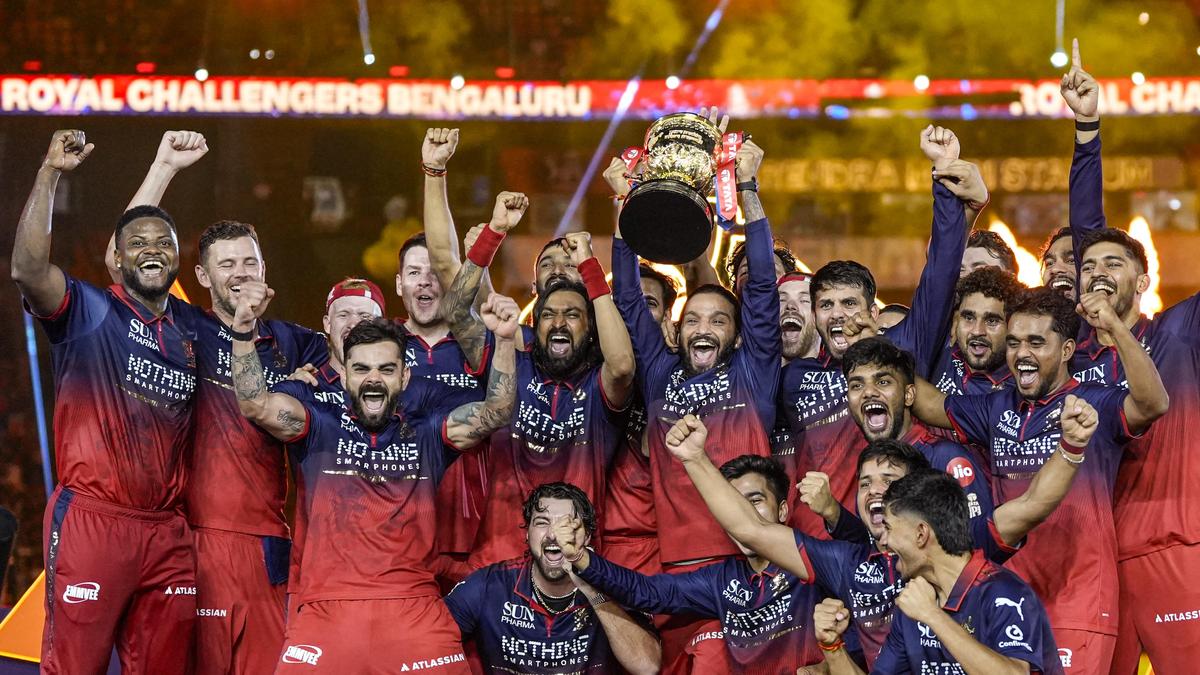
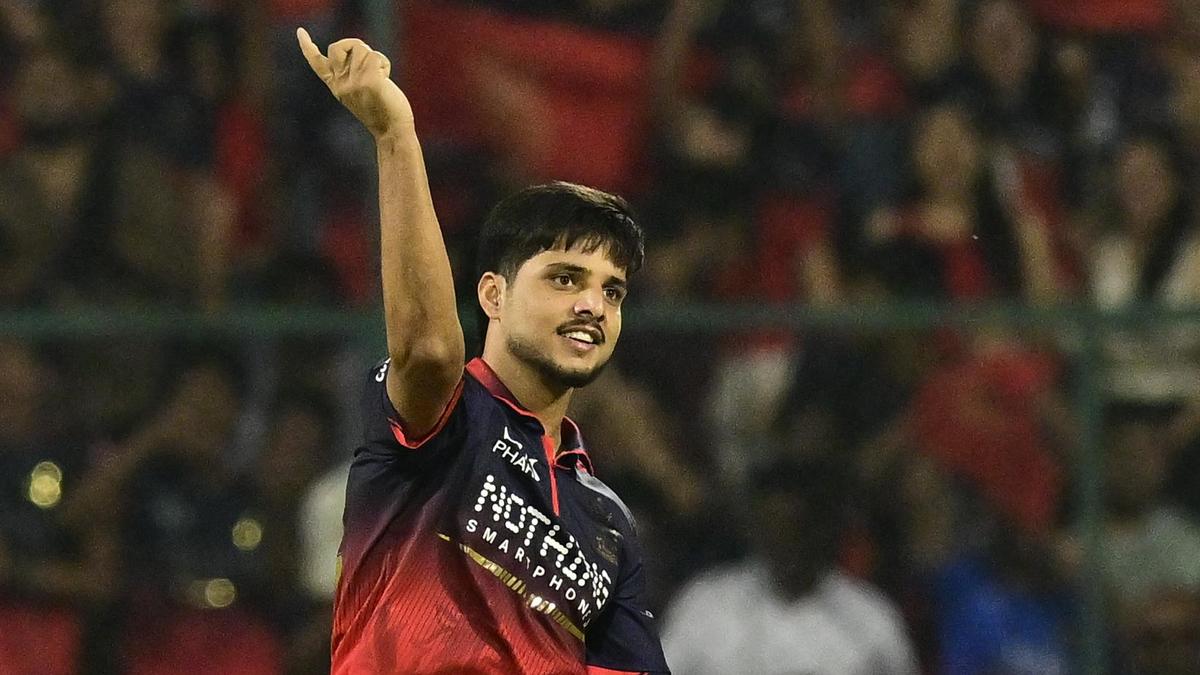
Rasikh finished the season with 19 wickets, including three in the final against Gujarat Titans.
| Photo Credit:
K. MURALI KUMAR
Rasikh finished the season with 19 wickets, including three in the final against Gujarat Titans.
| Photo Credit:
K. MURALI KUMAR
The goal was not to rebuild him. It was to simplify things. To help him find one repeatable action that would hold up whether he was bowling in a trial game in Srinagar or under lights in the IPL.
Years later, the rewards are beginning to show. Before the IPL, things were not entirely smooth. Rasikh had moved out of Jammu and Kashmir last year to represent Baroda in domestic cricket.
After a modest 2024 season with Delhi Capitals, RCB invested Rs. 6 crore in him at the mega auction — a move many viewed as a gamble at the time.
This season, however, Rasikh emerged as one of RCB’s most important contributors. With Yash Dayal absent, the franchise tried Abhinandan Singh for three games before eventually settling on Rasikh.
“When we gave the chance to Rasikh Dar, he looked confident,” RCB captain Rajat Patidar said. “He’s been playing in the IPL for the last 3-4 years. He is very much confident about his skills, about his slower ones, back of the hand ones and especially yorkers.
“I think he supported Bhuvi [Bhuvneshwar Kumar] and Hoff [Josh Hazlewood] in IPL 2026 [very well]. Whenever I see him, he has a clarity about his role. He spent a lot of time with (Omkar) Salvi sir. He is more clear about his plan. I always tell my bowlers. If you have a plan, go and execute it…”
While the spotlight naturally gravitated towards Hazlewood and Bhuvneshwar, Rasikh quietly became an essential piece of the puzzle. Trusted with difficult overs and high-pressure situations, he repeatedly delivered when called upon. He finished the season with 19 wickets — the eighth-most by any bowler — at an average of 21.30.
His three-wicket haul against Gujarat Titans in the final was the most visible example, but those within the game knew his contribution stretched far beyond one evening. Pathan certainly did.
In fact, he used an unusual analogy to describe Rasikh’s importance to the side in Dayal’s absence. “I think Rasikh was like a callus formation after a fracture,” Pathan said.
The comparison was apt. A callus forms when a broken bone begins to heal, strengthening the damaged area and restoring stability. In Pathan’s view, that was exactly the role Rasikh played.
He helped hold the attack together. “You cannot win a trophy with just two or three bowlers,” Pathan said. “You need a complete attack.”
For those who discovered him only this season, the rise may appear sudden.
For Pathan, it has been years in the making.
It began with a teenager walking away from a trial, convinced nobody had noticed him. The truth was that somebody had.
And all these years later, that belief is finally being rewarded.
Published on Jun 01, 2026