



Last Updated:
Between 2011 & 2021, BJP’s vote share rose from 4.06% to 37.97% — an increase of 34 percentage points. This wasn’t a result of short-term political swings, but of voter loyalties




For much of West Bengal’s political history, the BJP remained a marginal player. By 2016, however, the first signs of a political shift had begun to emerge.
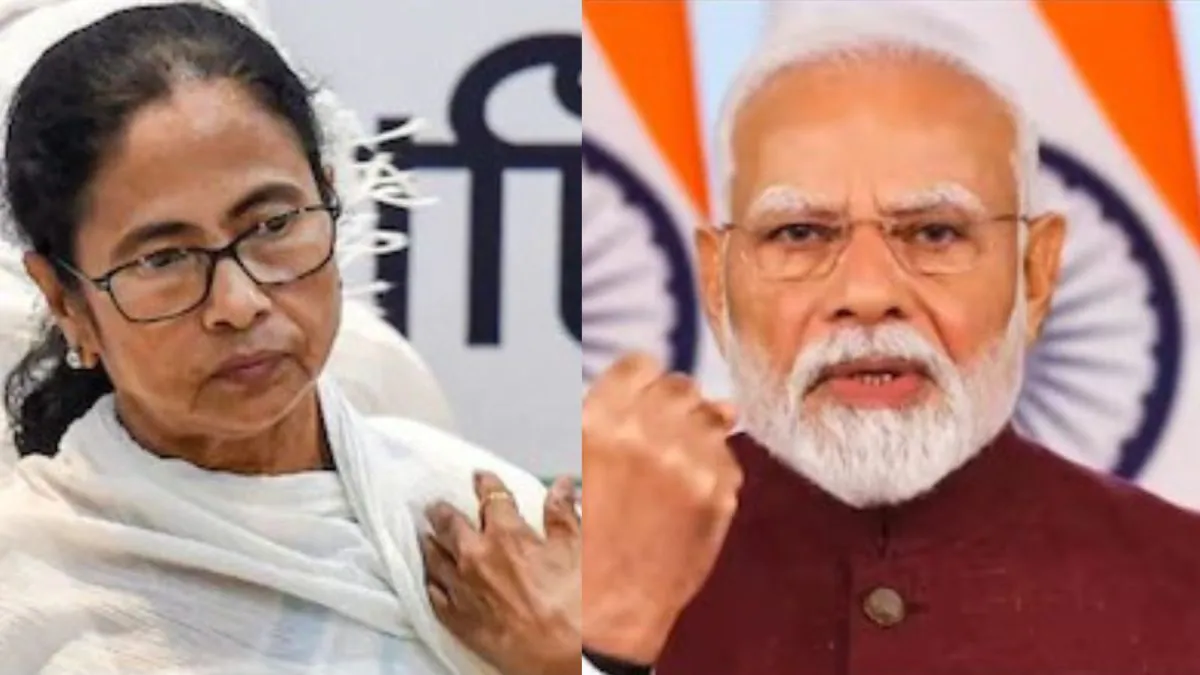
The Bharatiya Janata Party (BJP) scripted a historic victory in West Bengal on Monday, winning 207 of the 293 Assembly seats and ending Mamata Banerjee’s 15-year rule. The Trinamool Congress (TMC) was reduced to 80 seats, while Banerjee lost her Bhabanipur seat to BJP leader Suvendu Adhikari, marking a dramatic shift in the state’s political landscape.
The BJP retained its strongholds in north and southwest Bengal while making significant inroads into TMC bastions in Kolkata and adjoining districts. The party’s vote share rose to 45.8%, while the TMC’s declined to 40.8%.
The state witnessed a turnout of 92.8% in the first phase on April 23, followed by 91.47% polling in the second phase on April 29 — the highest recorded in West Bengal since Independence, according to the State’s Chief Electoral Officer.
Here is a look at how the BJP expanded its vote share in the state and its electoral journey over the past 15 years.
From Nobody To The Main Opposition Force In 2011
For much of West Bengal’s political history, the BJP remained a marginal player. In the 2011 Assembly elections, it secured just 4.06% of the vote and failed to win a single seat. The election itself was defined not by the BJP’s presence, but by the end of the Left Front’s decades-long rule.
The All India Trinamool Congress emerged dominant with 184 seats and a 38.93% vote share, while the Left Front, despite polling around 40.69%, lost power. The Congress, still a significant force at the time, won 42 seats with a 9.09% vote share.
By 2016, however, the first signs of a political shift had begun to emerge. The BJP increased its vote share to 10.16% and won three seats, marking its transition from a peripheral force to a growing challenger.
The transformation over the next five years was striking. Between 2011 and 2021, the BJP’s vote share surged from 4.06% to 37.97% — an increase of nearly 34 percentage points. This was not merely a result of short-term political swings, but pointed to a deeper realignment of voter loyalties across the state.
At the constituency level, this shift was even more pronounced. Seats such as Bhagabanpur, Ranaghat Uttar Purba, Santipur, Ranaghat Uttar Paschim, Bagdah, Moyna and Pursurah witnessed dramatic increases in the BJP’s vote share, in some cases exceeding 40 percentage points between 2016 and 2021.
By 2021, the BJP had firmly established itself as the principal opposition, winning 77 seats and capturing a significant portion of the anti-Trinamool vote — space that had once been dominated by the Left and the Congress.
Why The Year 2021 Was A Major Breakthrough For The BJP
The 2021 West Bengal Assembly elections marked a decisive victory for the All India Trinamool Congress, which secured a third consecutive term by winning 215 of the 294 seats. The BJP emerged as the principal opposition with 77 seats — a dramatic jump from just three in 2016. Its vote share surged to 37.97%, up from 10.17% five years earlier, signalling a major political shift in the state.
The BJP’s rise was particularly visible in North Bengal, once considered a Trinamool stronghold. Constituencies such as Dinhata, Tufanganj, Natabari, Cooch Behar Dakshin, Dhupguri and Sitalkuchi saw the BJP make significant gains. In Kalchini, BJP candidate Bishal Lama recorded one of the region’s biggest victories, defeating the Trinamool’s Wilson Champramary by a margin of around 15%. At the same time, the Trinamool managed to retain a handful of seats in the region, including Rajganj, Mal and Jalpaiguri, though often by narrow margins.
However, it was South Bengal that ultimately secured the Trinamool’s dominance. The party won 153 seats in the region, sweeping all 11 seats in Kolkata, all four in Jhargram and all 16 in Howrah. Its strong performance extended to key districts such as North and South 24 Parganas, Hooghly, Murshidabad and both Medinipur districts. In South 24 Parganas, the Trinamool won 30 of 31 seats, while in North 24 Parganas it secured 28 of 33. It also dominated Hooghly with 14 of 18 seats and Paschim Medinipur with 13 of 15.
The election was marked by closely fought contests across the state. As many as 37 Trinamool victories came with margins under 5%, including 18 seats decided by less than 2%. The BJP too won 32 seats within a 5% margin, with 10 of those decided by under 1%, highlighting the intensity of the contest.
One of the most closely watched battles was in Nandigram, where Chief Minister Mamata Banerjee lost to BJP’s Suvendu Adhikari by a slender margin of 0.86%, underscoring the razor-thin nature of several contests.
The election also confirmed the decline of traditional players. The Communist Party of India (Marxist) saw its vote share collapse to 4.71% in 2021 from around 30% in 2011, while the Communist Party of India became nearly irrelevant at 0.2%. The Congress, which had polled over 12% in 2016, dropped sharply to just 3.03%, as Bengal’s politics increasingly turned into a bipolar contest between the Trinamool and the BJP.
Interestingly, the Salboni constituency in Paschim Medinipur has long been seen as a political bellwether, since 1977, the party winning this seat has gone on to form the government in West Bengal.
Read More