










Last Updated:
The government cited “strengthening and securing Defence infrastructure” and other vital public security purposes as the main reason for reclaiming the strategically located land.




Getting a permanent membership here is notoriously difficult — the waiting period can stretch up to 37 years.
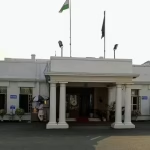
In the heart of Lutyens’ Delhi, one of India’s most exclusive institutions is facing an uncertain future. The Delhi Gymkhana Club, a colonial-era landmark established in 1913 as the Imperial Delhi Gymkhana Club, is now at the centre of a major controversy after the Centre ordered the re-entry of its prime 27.3-acre land.
The Land and Development Office (L&DO) under the Ministry of Housing and Urban Affairs has asked the club to hand over the premises at 2, Safdarjung Road by June 5, 2026. The government cited “strengthening and securing Defence infrastructure” and other vital public security purposes as the main reason for reclaiming the strategically located land.
The Ultimate Elite Club
For over a century, Delhi Gymkhana has represented the pinnacle of exclusivity in the capital. Getting a permanent membership here is notoriously difficult — the waiting period can stretch up to 37 years. Some applicants who applied in the 1970s are still on the list.
Membership isn’t just about wealth. The club evaluates candidates on “clubability” — an old-world blend of family background, social manners, professional stature, and how well one fits into its refined atmosphere. The membership quota is strictly divided: 40% civil servants, 40% defence services, and only 20% for others.
A Colonial Relic in Modern India
Walking into the club feels like stepping back in time. Members still sign for their drinks and meals instead of paying instantly — a system rooted in honour and trust. The dress code remains strict, favouring formal Western attire over traditional Indian wear in public areas.
The club has not been without controversy. It previously faced allegations of financial irregularities and favouritism, leading to government intervention. The “Green Card” system, which gave special privileges to adult children of members, was scrapped after audits found violations.
What’s Next For Delhi Gymkhana Club?
With the government now moving to reclaim the land for defence and public infrastructure needs, members and Delhi’s elite circles are anxious. The club has operated from this location since 1913, with its present buildings dating back to the 1930s.While the final outcome remains to be seen, this development has sparked intense discussion about the future of colonial-era institutions in a rapidly changing India. For many, Delhi Gymkhana was more than just a club, it was a quiet sanctuary for the capital’s most powerful and influential.
Whether this marks the beginning of the end for this ultra-elite institution or leads to a compromise, one thing is clear: very few places in India have guarded their legacy, exclusivity, and mystique as fiercely as the Delhi Gymkhana Club.
Read More