








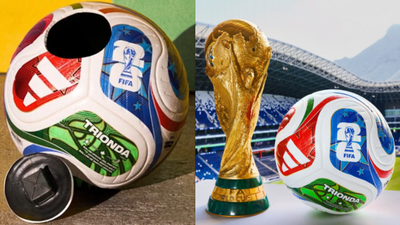
The official match ball for the 2026 FIFA World Cup is no longer just a football.For the first time in tournament history, the ball itself will function as a live tracking device capable of monitoring touches, movement, speed, spin and positioning in real time throughout every match.The Adidas-produced TRIONDA, which will be used throughout the tournament in the United States, Canada and Mexico, contains an embedded motion sensor chip that must be fully charged before kick-off.That detail alone has become one of the most discussed technological talking points ahead of the expanded 48-team World Cup, especially after FIFA confirmed the ball would play a direct role in officiating decisions alongside VAR systems and stadium tracking cameras.
What is the TRIONDA World Cup ball?
Adidas designed the TRIONDA specifically for the environmental and logistical demands of the 2026 FIFA World Cup across three different host countries.The name “TRIONDA” translates roughly to “three waves” in Spanish and reflects the tournament’s joint hosting arrangement between United States, Canada and Mexico.The visual design also mirrors the host nations through a tricolour scheme featuring blue for the United States, red for Canada and green for Mexico.
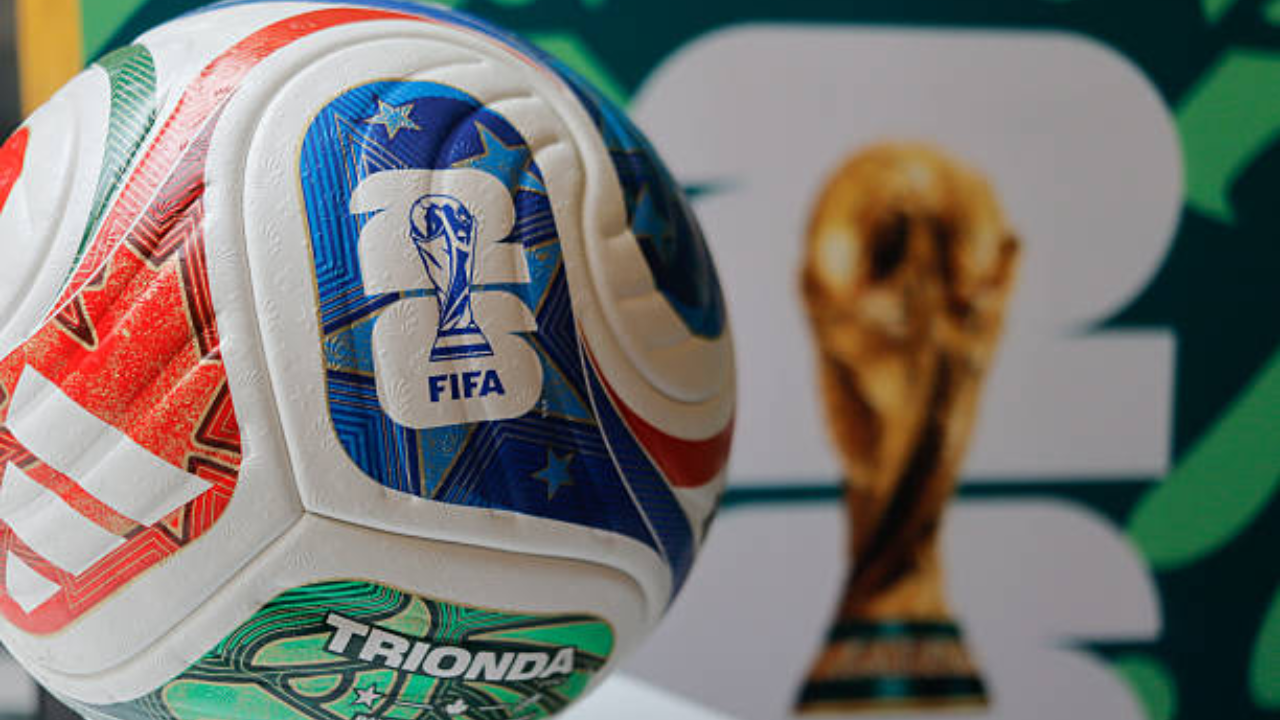
FIFA World Cup 2026 (via Getty Images)
However, the most important part of the ball is hidden internally rather than externally.
The World Cup ball now contains a built-in motion sensor
Inside the TRIONDA sits a 500Hz motion sensor chip developed by Adidas.That chip records data 500 times every second, allowing the system to detect the exact instant a player touches the ball while simultaneously tracking speed, trajectory, spin and directional changes in real time.The sensor itself weighs approximately 14 grams and is embedded directly into one of the ball’s panels. Earlier connected-ball technology used more complicated suspension systems and tension wiring through the middle of the ball, including during the 2022 FIFA World Cup in Qatar.For the 2026 edition, Adidas reportedly redesigned the technology so the chip integrates more naturally into the outer panel structure without affecting performance, bounce, weight or feel during matches.Players are not expected to notice any physical difference while kicking or heading the ball.
Why the ball needs charging before matches
Because the tracking system operates continuously during games, the sensor requires battery power to function.Each TRIONDA ball reportedly lasts around six hours on a full charge, comfortably covering a full match along with pre-match preparation time.That means referees and match officials must now ensure the footballs are fully charged before kick-off in the same way other technical equipment is checked and prepared.Despite the unusual idea of charging footballs before matches, the battery and sensor system remain completely invisible during play.
How the technology works with VAR and offside decisions
The ball sensor becomes even more powerful when combined with stadium tracking technology installed throughout World Cup venues.Multiple high-speed cameras positioned around each stadium simultaneously track every player movement while the ball’s internal sensor independently records its own position and contact moments.Together, the systems create a live three-dimensional model of the entire match.According to reports, the technology can collectively determine the exact location of both the ball and every player on the pitch around fifty times every second.That data then feeds directly into the Video Assistant Referee system in real time.Because officials now know the precise millisecond when the ball was touched, tight offside decisions become significantly faster and more accurate. The system also assists with goal-line technology, handball incidents, foul reviews and contested ball-contact moments.The technology essentially combines multiple existing systems into one unified platform, including goal-line technology used in football, Hawk-Eye systems commonly associated with tennis and advanced athlete-tracking technology already seen across several professional sports.
FIFA sees connected-ball technology as the future
This is not the first time FIFA has experimented with connected-ball technology, but the TRIONDA system is regarded as a significant upgrade compared to previous versions.The 2026 World Cup edition reportedly offers faster processing speeds, deeper integration with officiating systems and more precise live tracking than earlier tournament balls.FIFA and Adidas both view the technology as part of football’s broader movement toward automation, real-time analytics and data-assisted officiating.With the 2026 FIFA World Cup expanding to 104 matches across three countries, the TRIONDA has effectively turned the football itself into one of the tournament’s most important pieces of technology.