








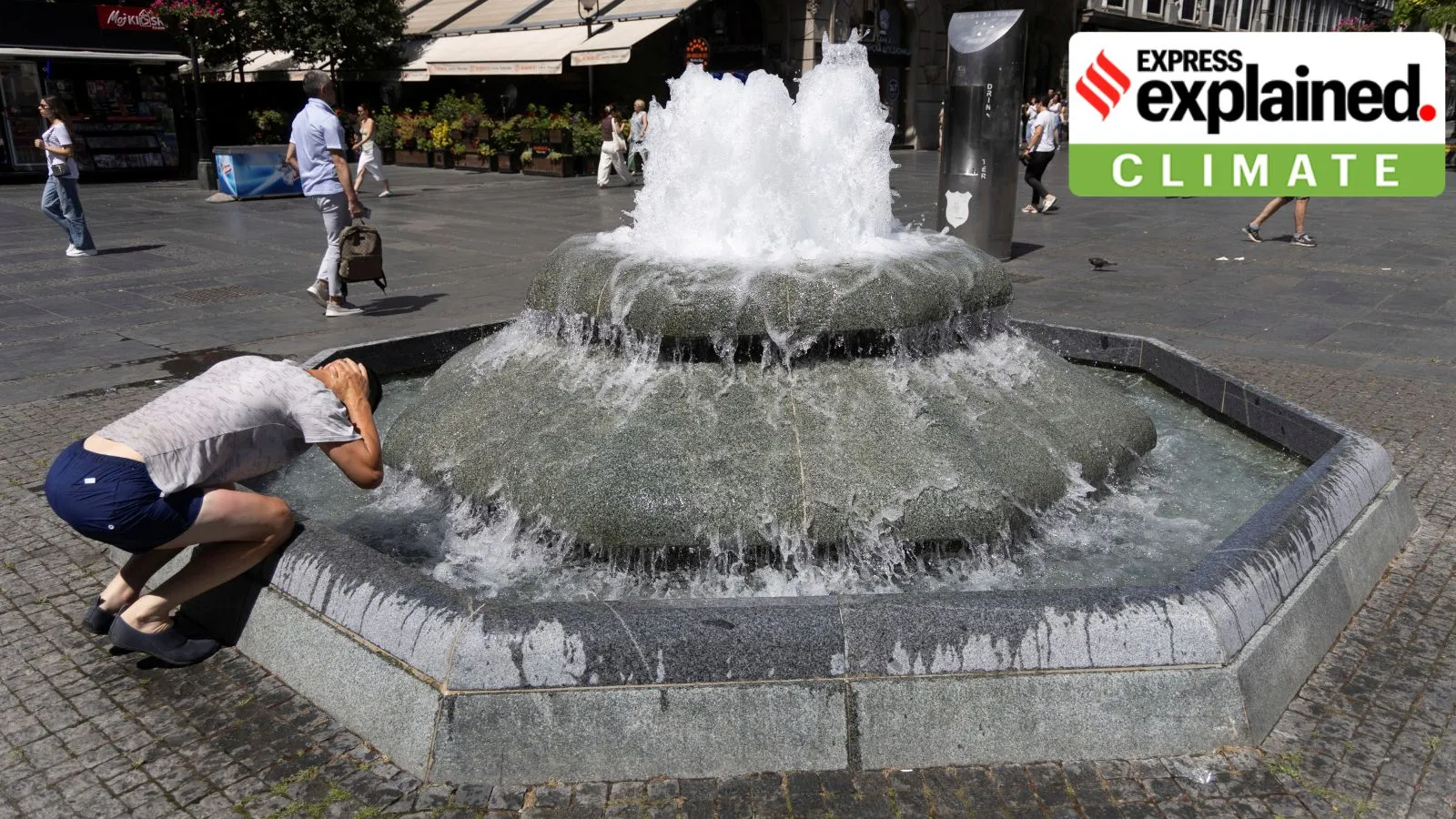
Several parts of Europe saw temperatures touch 40°C on Sunday (June 28), with France alone reporting 1,000 excess deaths during an unprecedented heatwave which began on June 20.
The ongoing heatwave has affected more than 150 million people, disrupting power generation, damaging infrastructure and overwhelming healthcare systems. A rapid attribution study by World Weather Attribution found the heatwave would have been “virtually impossible” without human-caused climate change and made higher night-time temperatures up to 100 times more likely than they would have been two decades ago.
The major policy debate now, however, concerns the public mandate for air-conditioning. The far-right National Rally Party in France, led by presidential hopeful Marine Le Pen, has announced a national air-conditioning plan to equip all schools and hospitals with ACs, as well as government-backed interest-free loans worth €20bn ($22.7bn) to allow about 40 million householders to install cooling units. In Britain, the opposition Conservatives have similarly argued for expanding domestic energy production, including fossil fuels, to meet rising electricity demand driven by cooling.
Critics say the answer to extreme heat lies elsewhere, arguing that widespread air conditioning risks locking Europe into higher energy consumption, raising electricity demand during heatwaves, and worsening climate change.
The proposals have opened a wider debate over how Europe should adapt to hotter summers without undermining its climate goals. Here is what to know.
Why does Europe not have air-conditioning?
For the longest time, Europe has expressed an aversion to air-conditioning, with the French in particular viewing ACs as garish and American. A longstanding belief in France is that continued exposure to cold air can make you sick, while the appliance is widely regarded as a luxury product. For many, homes with thick stone walls, wooden shutters and open windows reflected good architecture, making mechanical cooling seem unnecessary rather than aspirational.
Only about a fifth of European households have ACs, compared with much higher ownership rates in countries in North America and Asia. Penetration also varies sharply within Europe. Southern European countries, such as Italy, Spain and Greece, rank well ahead of northern Europe in AC ownership, according to Eurostat data. Italy alone accounts for over one-third of all electricity used for air conditioning across the 27 European Union member states.
Story continues below this ad
Beyond cultural attitudes towards the appliance, there are three major reasons why AC penetration has remained limited across the continent.
The first is climate. Countries in southern Europe built their cities to manage the heat, with thick walls, shaded windows and well-ventilated street layouts. These cities also feature light-coloured facades and reflective surfaces that reduce heat absorption, helping interiors to stay cool. By contrast, northern Europe, which for decades experienced relatively mild summers, designed its buildings to trap heat during long winters.
The challenge has become particularly acute in cities such as Paris, where many apartment blocks have zinc roofs and limited insulation against summer heat, causing upper floors to heat up rapidly during prolonged hot spells.
Another major barrier is cost. Household electricity prices in Europe are significantly higher than in the United States, a gap that widened after the 2022 energy crisis triggered by Russia’s invasion of Ukraine. While AC units have become relatively more accessible, the cost of running them keeps them out of reach for many households.
Story continues below this ad
The third reason is environmental. Policymakers and climate experts have long argued that widespread air-conditioning creates a vicious cycle: it increases electricity demand, much of which is still met by fossil fuels, while also releasing waste heat outdoors and making cities even hotter.
That thinking has also shaped European climate policy. The European Union has committed to reaching net-zero emissions by 2050, while governments have focused on improving energy efficiency, expanding renewable energy and reducing energy demand. Encouraging millions of new air-conditioners therefore, sits uneasily with Europe’s broader climate goals.
Why is this continental consensus now being challenged?
For the longest time, the European summer has meant long evenings, open windows and holidays built around warm, but bearable, weather. As Europe warms faster than any other continent, that experience is becoming less common.
Heatwaves are becoming more frequent, longer and more intense, forcing Europe to rethink its longstanding relationship with air-conditioning. Unlike cold weather, heat often kills quietly, especially among older people, children and outdoor workers.
Story continues below this ad
Homes that stayed comfortable a generation ago now struggle through days of 35°C temperatures and nights that offer little respite. Hospitals have reported surges in heat-related illnesses, while schools, care homes and workplaces have found themselves unprepared for prolonged spells of extreme heat.
That has exposed an uncomfortable reality. Air-conditioning can save lives during extreme heat, but widespread adoption also increases electricity demand and, where grids still rely on fossil fuels, the emissions that contribute to rising temperatures.
This has turned air-conditioning into a political question, drawing a clear ideological divide. The far-right National Rally has framed access to cooling as a public health necessity, dismissing concerns that wider AC use could worsen climate change through higher energy consumption and emissions. Parties on the left, such as the far-left France Unbowed, argue that governments should instead prioritise measures such as better building design, insulation, tree cover and urban greening over widespread air-conditioning.
Public health authorities have largely rejected framing the debate as a binary choice. The WHO says governments should prioritise access to cool indoor spaces during heatwaves, especially for vulnerable people, while also investing in longer-term measures such as better building design and urban greening rather than relying solely on air conditioning.