








Both of these modern retro bikes look quite tempting, but one is a lot more powerful than the other
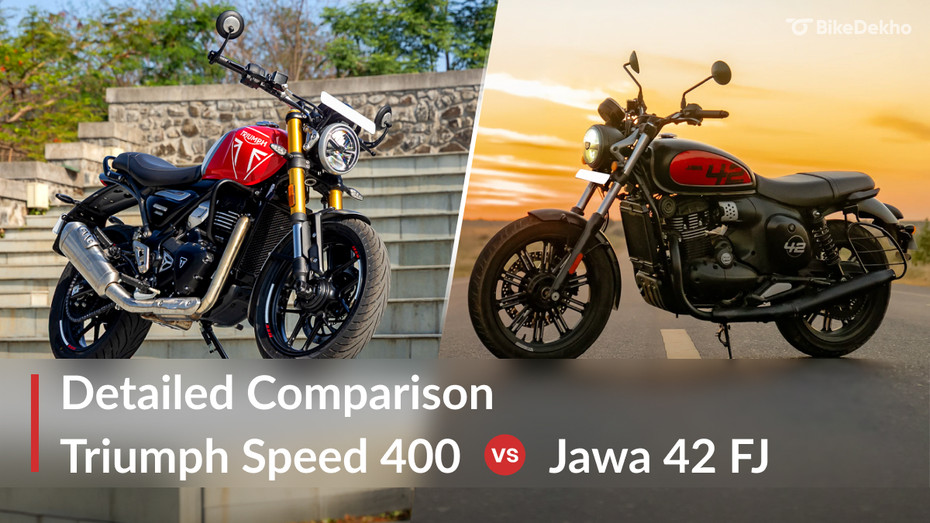
The Triumph Speed 400 and Jawa 42 FJ are modern-retro motorcycles in the mid-capacity segment, each catering to different types of riders. The Speed 400 brings the iconic British nameplate along with top-shelf hardware, premium finish, and class-leading performance. The Jawa 42 FJ also carries its years-old legacy; however, it is a more affordable and accessible proposition, that focuses on a stronger classic character than outright performance and features.
Price & Variants
|
Triumph Speed 400 |
Price (ex-showroom,Delhi) |
Jawa 42 FJ |
Price (ex-showroom, Delhi) |
|
Aurora Green Matte – Spoke |
Rs 1.94 lakh |
||
|
Aurora Green Matte – Alloy |
Rs 1.95 lakh |
||
|
Cosmo Blue Matte / Mystique Copper |
Rs 1.98 lakh |
||
|
Standard (4 colour options) |
Rs 2.32 lakh |
Deep Black Matte Red / Matte Black |
Rs 2.05 lakh |
-
All four colour variants of the Triumph Speed 400 are priced similarly, while the Jawa 42 FJ’s price varies depending on wheel type and colour options.
-
The 42 FJ is Rs 27,000-38,000 more affordable than the Speed 400, making it the more accessible option for buyers who are stepping into this segment for the first time.
-
Jawa’s 4-year / 50,000km warranty (extendable to 6 years), along with 1-year complimentary roadside assistance, is a major ownership advantage.
-
While, the Speed 400 comes with a 2-year unlimited-mileage warranty and a class-leading 16,000km service interval, which significantly reduces running costs.
Dimensions & Design
|
Specification |
Triumph Speed 400 |
Jawa 42 FJ |
|
Wheelbase |
1,386mm |
1,440mm |
|
Seat Height |
803mm |
790mm |
|
Ground Clearance |
164mm |
178mm |
|
Kerb Weight |
179kg |
184kg |
|
Fuel Tank |
13 litres |
12 litres |
-
The lighter and shorter Triumph Speed 400 feels pretty agile, making it easy to filter through city traffic. The Jawa 42 FJ, meanwhile, feels more planted and easier to flat-foot, thanks to its longer wheelbase and slightly lower seat height.
-
The 42 FJ comes with slightly more ground clearance, but a slightly smaller fuel tank..
-
The Jawa J is heavier, but its lower seat height makes it more accessible to shorter riders.
-
Design sets the two apart. Taking inspiration from the bigger modern classics in Triumph’s lineup, the Speed 400 looks very precisely and obsessively designed. It features a sculpted teardrop tank, gold anodised inverted fork and black powder-coated engine casings, but what makes it more special are its premium paint finish and attention to detail.
-
The 42 FJ, meanwhile, has a richer vintage flavour with classic fairing inspired by vintage Jawa motorcycles, brushed aluminium tank panels, wide handlebars, and blacked-out engine elements. It looks purposeful and sporty while staying rooted in retro tradition.
Ride & Handling
|
Specification |
Triumph Speed 400 |
Jawa 42 FJ |
|
Frame |
Tubular steel |
Double Cradle |
|
Front Suspension |
43mm InvertedFork, 130mm travel |
41mm Telescopic Fork |
|
Rear Suspension |
Monoshock with external reservoir, preload adjustable, 120mm travel |
Twin Shocks, 5-step preload adjustable |
|
Front Brake |
300mm disc with a 4-piston radial caliper |
320mm disc with a floating caliper |
|
Rear Brake |
230mm disc |
240mm disc |
|
Front Tyre |
110/80-R17 |
100/90-18 |
|
Rear Tyre |
150/70 R17 |
140/70-17 |
-
The Triumph Speed 400’s steel tubular frame with cast aluminium swingarm is the more advanced architecture, resulting in a tight, responsive feel that rewards confident riding.
-
Meanwhile, the Jawa 42 FJ’s double-cradle frame is a more traditional setup, tuned more for comfort and stability than outright agility.
-
The Speed 400’s 43mm inverted fork and monoshock with external reservoir are a class above the Jawa’s conventional 41mm fork and twin shocks, offering better feedback and control, especially through corners.
-
The 42 FJ’s twin-shock setup is more familiar and rides adequately in city use, but the Triumph’s monoshock is a more progressive, performance-oriented setup.
-
While the 42 FJ has larger brake discs, the Speed 400’s four-piston radial calliper at the front offers a sharper, more progressive feel.
-
Wider, more premium rubber on the Triumph (110/80 front, 150/70 rear) improves stability and grip. The Jawa’s 18-inch front wheel gives a more classic ride character.
-
Triumph’s wide, more premium radial tyres contribute to better stability and grip, while the Jawa’s 18-inch front wheel soaks up road imperfections slightly better at lower speeds.
Features & Technology
|
Feature |
Triumph Speed 400 |
Jawa 42 FJ |
|
Lighting |
All-LED |
All-LED |
|
Instrument Cluster |
Analogue + Digital LCD |
Fully Digital LCD |
|
ABS |
Dual-channel (Switchable) |
Dual-channel |
|
Traction Control |
Yes – Switchable |
No |
|
Ride-by-Wire |
Yes |
No |
|
Immobiliser |
Yes |
No |
-
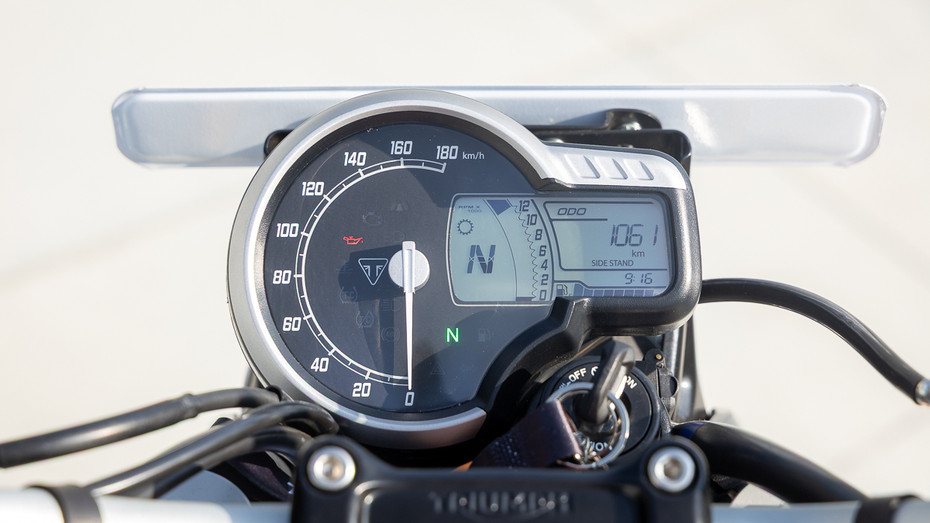
The Triumph Speed 400 leads in electronics with features like a ride-by-wire throttle, switchable traction control, switchable dual-channel ABS, and an anti-theft immobiliser with a security chip in the ignition key.
-
Both motorcycles offer all-LED lighting with informative instrument clusters, but lack Bluetooth connectivity or smartphone pairing. However, neither offers Bluetooth connectivity or smartphone pairing, which is a limitation at this price point.
Engine & Performance
|
Specification |
Triumph Speed 400 |
Jawa 42 FJ |
|
Engine Type |
Single-cylinder, liquid-cooled, DOHC |
Single-cylinder, liquid-cooled |
|
Displacement |
349cc |
334cc |
|
Max Power |
37PS at 8,500rpm |
29.2PS at 7,500rpm |
|
Max Torque |
32Nm at 7,000rpm |
29.6Nm at 6,000rpm |
|
Gearbox |
6-speed |
6-speed |
|
Clutch |
Torque-Assist |
Slip-and-Assist |
|
Fuel System |
Bosch EFI with electronic throttle |
Fuel Injection |
-
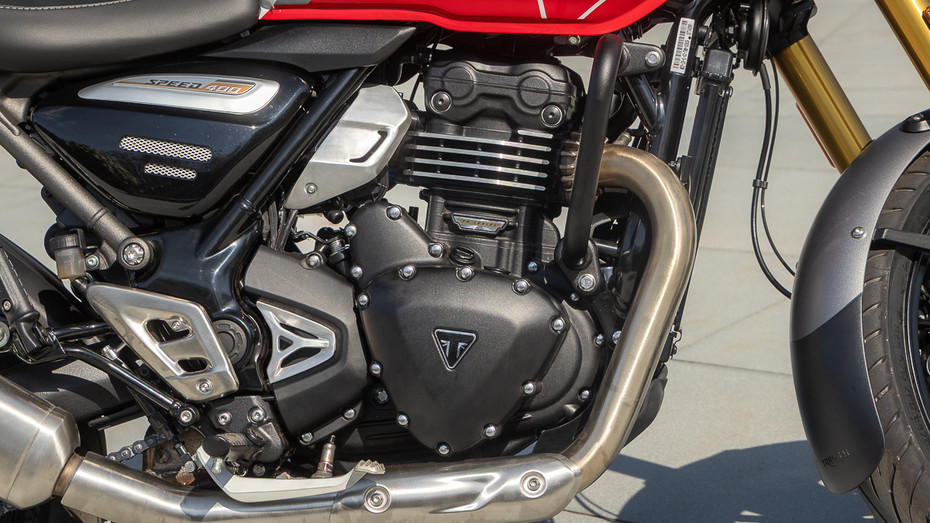
The Triumph’s more advanced DOHC engine produces about 8PS and 2.5Nm more than the 42 FJ. It is smoother, freer-revving, and noticeably quicker when pushed.
-
While the Speed 400 offers a much better mid-to-top end, the 42 FJ’s engine peaks earlier and feels more accessible at city speeds, relaxed and punchy in the low-to-mid range.
-
Both use a 6-speed gearbox with an assist clutch. However, the Triumph’s ratios are set up for spirited riding, while the Jawa’s are tuned for ease.
-
The Speed 400 also feels more responsive, thanks to the ride-by-wire technology.
Verdict
The Jawa 42 FJ can be a good option for those who want a good-looking, characterful classic with decent performance and workable features. It is easy to live with and easier on the wallet, especially considering its 4-year standard warranty and complimentary roadside assistance.
The Triumph Speed 400 is surely a better motorcycle for a very reasonable premium of Rs 27,000-30,000, offering more power, better hardware, superior electronics, and a name that carries genuine international weight. Plus, the class-above details and finishing it make it even harder to argue against it, if the budget allows.
Both are worth your time. Which one you pick simply depends on how much you are willing to spend and what you expect from a motorcycle every single day.
Other Rivals
The Classic 350 is more affordable and has a timeless heritage appeal, but trails significantly on performance and electronics compared to the Triumph Speed 400.
The Honda CB350 H’ness matches the Speed 400 on refinement, but it is far less powerful and less dynamic to ride.
The Apache RTR 310 is more performance-focused with advanced electronics, while the Speed 400 scores higher on lifestyle quotient.