

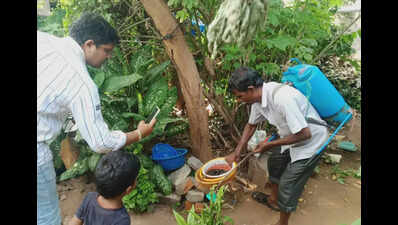
Bhubaneswar: Number of dengue positive cases plunged from 4,254 in 2023 to a mere 327 in 2025, an immensely laudable feat on behalf of Bhubaneswar Municipal Corporation.The figures came in amid BMC stepping up dengue-control measures by deployment of 70 additional workers exclusively for mosquito breeding source destruction.Deputy commissioner (health) Rashmirekha Amat cited a 71.2% drop in dengue cases in 2024 compared to 2023, followed by a 73.31% reduction in 2025. “Considering the gradual reduction in cases and our intensive mosquito breeding source destruction drive, we project that in this monsoon, cases will be under considerable check,” Amat said.Health experts have projected a sharp fall in Bhubaneswar’s dengue test positivity rate (TPR) this year, with the figure expected to drop below 1. The city has recorded a steady decline over the past three years — from 9.34 in 2023 to 3.64 in 2024, and further to 1.08 in 2025.On Wednesday, BMC carried out entomological risk assessments, vector-borne disease supervision, epidemiological investigations and awareness activities focusing on anti-larval measures and source reduction. Teams comprising epidemiologists, communication specialists and filaria inspectors are working across all three city zones.BMC commissioner Chanchal Rana appealed to residents not to allow stagnant water to collect in their homes, saying it provides ideal mosquito breeding conditions. Officials said sustained awareness campaigns have reduced cases in dengue hotspots. Data showed Patia, Nayapalli and Saheed Nagar registered significantly fewer cases last year. Patia’s cases fell from 370 in 2023 to 19 in 2024, Nayapalli from 308 to 15, and Saheed Nagar from 214 to 12.Officials credited the decline to public engagement, awareness drives and strict monitoring of breeding sites. With civic action and community participation, the city expects dengue cases to remain under control this monsoon.BMC has also decided to coordinate with IDCO/MSME and other departments and market associations to ensure dengue prevention measures are implemented on their respective premises. “Special attention will be given to hotspot areas through intensive fogging and anti-larval activities under the supervision of the BMC health officer,” BMC officials said.BMC stated that various govt and private offices and schools would also be directed to detect mosquito breeding sources and destroy them. There are open stockyards in both offices and schools, which have abandoned articles that become mosquito breeding sources. In the second phase, residents will be educated on how to check household articles and spaces around to prevent accumulation of water.