





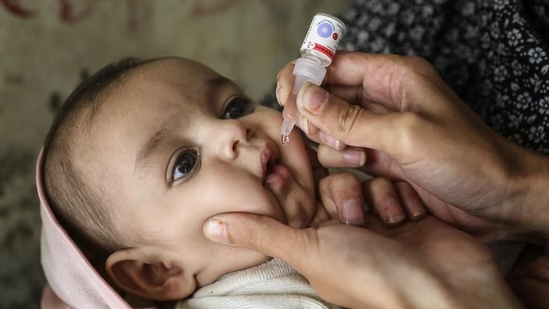
The eradication of polio stands among the greatest public health achievements of our time — and in India, it showed what is possible when political will is matched by sustained institutional discipline. India was officially certified wild poliovirus-free on March 27, 2014, a milestone many once considered impossible for a country of India’s size, diversity, and public health challenges.
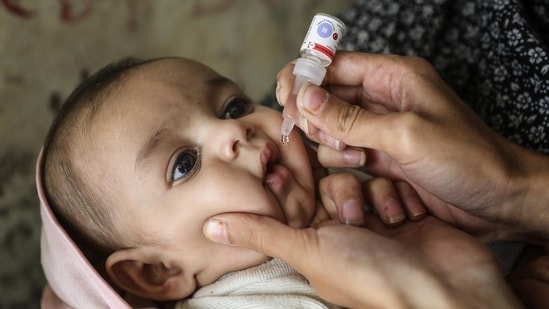
The most consequential lesson from India’s journey is that polio elimination is a dynamic state that must be actively protected through ongoing vigilance.
History is unambiguous on this point. Diseases are careless of geographical and political boundaries. No country’s gains are fully secure while the virus persists anywhere. Polio-free certification is frequently interpreted as closure, when in fact, the virus is near our borders.
As of April 21, 2026, three cases of wild polio have been reported in Afghanistan and one case has been reported in Pakistan — as India’s neighbors face this paralysing and potentially deadly disease, we are reminded that the path to a polio-free world remains fragile and unfinished.
Polio-free status must be actively maintained against a pathogen that can spread silently and cross undetected borders. The greatest threat is complacency after a prolonged absence of cases.
India has structured its surveillance systems precisely to counter that complacency.
In addition to tracking acute flaccid paralysis, India also conducts environmental surveillance by testing sewage samples across more than 50 strategic sites nationwide, intercepting the poliovirus before it can permanently impair a child’s mobility.
India’s response protocol is quite clear, even a single environmental positive would trigger a coordinated, large-scale immunisation campaign response, the kind of preparedness ingrained in a mature public health system.
True success is measured not solely by the absence of disease, but by the strength of the systems that prevent its return.
The elimination of polio in India succeeded because 2.4 million vaccinators and 150,000 supervisors were mobilised during National Immunisation Days, reaching communities that formal health infrastructure had consistently underserved. Before Covid, this effort ran through one National Immunisation Day and two sub-national Immunisation Days annually. That sustained cadence was not incidental; it was the mechanism through which programme presence was converted into population trust. At that scale, logistics was only part of the challenge. Trust was the other — and it could be mandated.
The architecture behind this effort was deliberately multi-sectoral. The ministry of health and family welfare provided policy direction and resources. At the same time, Rotary, UNICEF, the World Health Organization and other partners of the Global Polio Eradication Initiative bridged the gap between government reach and community acceptance. Rotary’s India National PolioPlus Committee and Rotary volunteers were also the connective tissue between the programme and the populations it needed to reach most urgently.
At the heart of this model was the Social Mobilisation Network — over 7,000 Community Mobilisation Coordinators, predominantly local women, were deployed across the country’s most resistant and marginalised areas. They did not simply deliver drops; they dismantled resistance and built the trust necessary to sustain high immunity where formal systems had consistently fallen short.
This distinction carries a direct strategic implication for any large-scale public health initiative. Governments can fund campaigns and legislate compliance, but they cannot legislate credibility. In communities where vaccine hesitancy intersected with cultural reservations, geographic isolation, or historical mistrust of State institutions, it was these civil society actors who created the access and acceptance for the vaccine in the most resistant and marginalised areas. Their credibility was earned through sustained presence rather than periodic outreach.
The last mile of any public health initiative is rarely a logistical problem. It is typically a social one. India’s experience shows national policy succeeds only when it is carried into communities through meaningful collaboration, structured around shared accountability.
Eradication sustained is eradication defended. The shift from elimination to permanent defence marks a fundamental change in responsibility.
Nations that treat zero cases not as an endpoint, but as an ongoing discipline, are best positioned to protect their gains and contribute to the final push toward a polio-free world.
India is not merely safeguarding its polio-free status. By integrating environmental surveillance, community mobilisation, and government–NGO partnerships into a unified system, it is actively strengthening the global architecture for polio eradication.
As India prepares for the upcoming National Immunisation Day on June 28, 2026, the scale of this effort remains significant, with over 15.6 crore children targeted across all states and Union Territories. Maintaining high coverage is critical to sustaining India’s polio-free status and working toward a polio-free world. For parents, especially those with young children, participation is essential. Every child must be reached, so that no child, anywhere, faces the threat of polio again.
(The views expressed are personal)
This article is authored by Deepak Kapur, chairman, Rotary International’s India National PolioPlus Committee (RI-INPPC).