






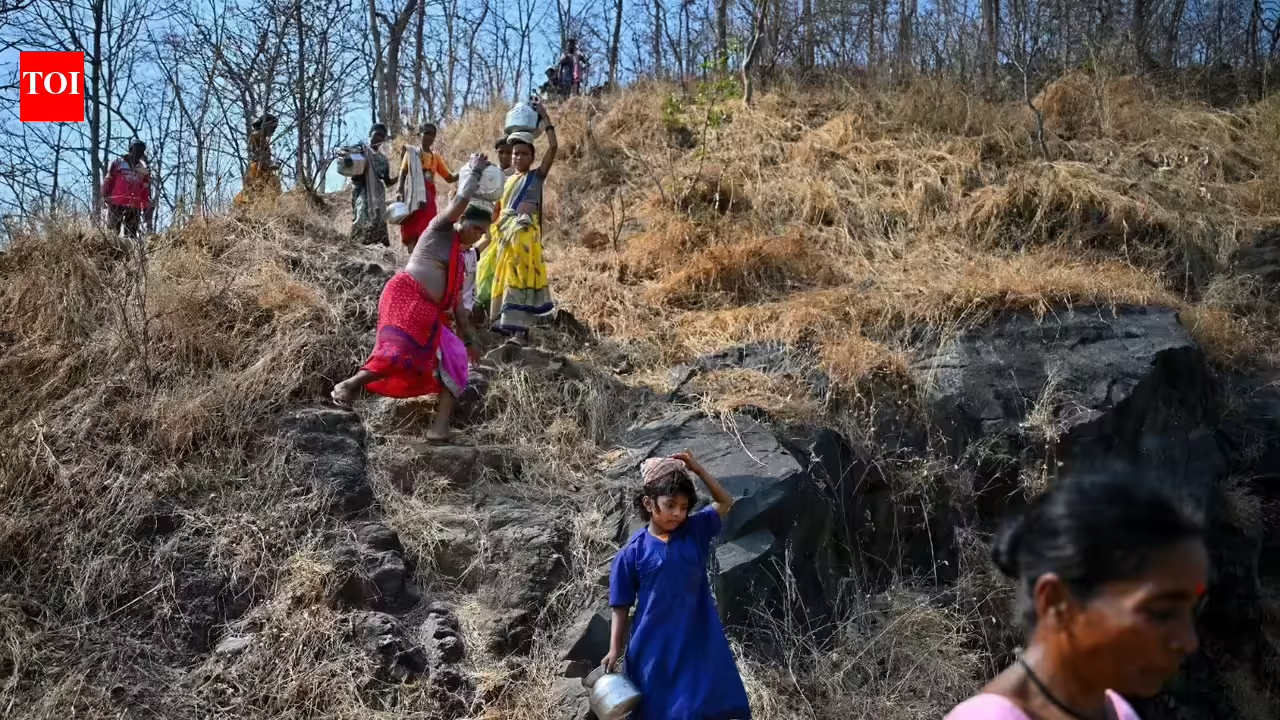
Shahapur: The hilltop village of Dapurmal — a remote adivasi hamlet of around 325 people perched above Upper Vaitarna dam in Thane district’s Shahapur taluka, around 120km from Mumbai — will finally be connected to the world via a motorable road.For decades, villagers would trek for hours on the hilly terrain into neighbouring villages for household supplies, medical aid, higher education, water and even work.After TOI’s May 11 report highlighting the plight of women and little girls who are forced to trek 8km through the steep terrain to collect their pots of drinking water, Mumbai-based NGO Chandra Hasmukh Soni Foundation offered to construct the long-awaited road to the village. “All formalities related to permissions and execution of the road work have been completed. We expect the actual road construction work to begin within the next two to three days,” Vishal Gangar of Chandra Hasmukh Soni Foundation told TOI.Shahapur division tehsildar Parmeshwar Kasule also confirmed that all major permissions and formalities related to the road project, including forest clearances, have been completed, and the work is expected to begin through the NGO this week. Kasule further said that a direct water supply project from Middle Vaitarna for the village is also in its final stage. “The work is nearing completion and supply will begin shortly,” he added.Villagers pointed out that absence of a motorable road kept Dapurmal cut off not only from water tankers, but also from basic facilities such as healthcare, transport and education.According to locals, Shahapur taluka has nearly 160 villages and padas facing water scarcity, but most of them get tanker supply as they have motorable roads. The district administration operates around 37 tankers in various villages during summer, but Dapurmal remains inaccessible due to its terrain.Every morning, residents — mostly women and little girls — walk nearly 8km through steep and rocky forest paths to fetch water from the Middle Vaitarna dam region, which ironically supplies water to millions of Mumbaikars. The return journey, carrying heavy pots on their heads under the scorching heat, often takes close to four hours.“We have been facing this ordeal every summer for years,” said Rekha Pardhi, a villager. “The well near our homes dries up between March and June. We have no option but to walk through the hills to bring water. Carrying a full pot back on the uneven path is extremely difficult. Many times we have to stop midway and rest.”“Had there been a road, tankers could have easily reached us too,” said another villager. “During elections, leaders come here asking for votes and promising roads, but they never return after being elected.”Villagers recalled that in August 2025, former Thane zilla parishad CEO Rohan Ghuge, along with officials, had trekked nearly 5km through the hilly stretch after learning about their plight. Following the visit, some patchwork for a kaccha road and construction of a single classroom structure was undertaken. But, said villagers, the work remains far from sufficient. “The path is still extremely risky and difficult due to the hilly route, especially during monsoon,” a resident said.Several NGOs and social organisations had attempted to intervene earlier too, but the proposed road alignment falls under forest land, resulting in years of delays over permissions and approvals.Activist Nutan Desai, who has worked extensively on water access in remote villages across Maharashtra, said Dapurmal’s situation remains among the most challenging she has encountered. “I have worked in difficult regions of Palghar’s Wada, Aurangabad and Jalna, where we managed to provide water through tankers,” Desai told TOI. “But in Dapurmal, even tanker access is impossible because there is no road.”The state government is also working on a broader drinking water plan for Shahapur’s water-scarce villages through the Bhavali dam project in Nashik district’s Igatpuri under the Jal Jeevan Mission. While pipelines and tap connections have been installed in several villages, officials said water supply in many areas may still take time due to pending connectivity work.