







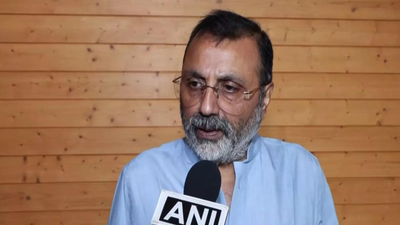
In a conversation with TOI ’s Manash Gohain , BJP MP and chairperson of parliamentary standing committee on communications and information technology, Nishikant Dubey , speaks on digital addiction, AI risks, fake news, cyber fraud, exam stress, online gaming, deepfakes and why India may need stronger digital guardrails for children and the youth. Excerpts:Your committee has spoken about KYC verification, age restrictions and AI regulation. Why did the committee feel these recommendations were necessary?When we travelled across constituencies and interacted with people, one thing became very clear – uncontrolled digital exposure is becoming dangerous, especially for children and teenagers. Look at online gaming. Children were secretly using parents’ bank accounts, losing huge sums of money, and in some cases families were pushed to extreme distress and even suicidal situations. AI-generated advertisements and manipulative digital content are making these platforms even more addictive and difficult to regulate. At the same time, India’s laws were framed in a very different era. When the Press Council Act or Cable TV laws were made, nobody had imagined today’s digital ecosystem where anyone can run a YouTube channel, Facebook channel or digital platform without accountability. A newspaper in print faces restrictions, but the same content online often escapes institutional oversight. The committee felt there had to be some line somewhere. Countries across the world – including Australia, Singapore and parts of Europe – are already discussing or implementing age-based restrictions for children online. Another concern was how AI is beginning to blur the line between fact and fabrication. I personally experienced a situation where fake material generated through digital platforms got mixed into a genuine discussion and compromised the credibility of the entire conversation. Today, even courts are facing concerns over AI-generated fake references and fabricated judgments. The Chief Justice of India himself has repeatedly warned about blind dependence on AI tools in legal work. So naturally the concern becomes even bigger when it comes to children and students. India’s biggest strength is its youth population. If future generations drift away from reading, research and critical thinking, it will eventually affect innovation, productivity and the country’s long-term growth ambitions. You used a striking comparison – social media is like drugs. Why do you say that?Because it works like an addiction. Social media constantly gives psychological “kicks”. After some time, children lose interest in studies, books, research and even normal human interaction. I am not saying children should be completely cut off from technology. Phones are useful for libraries, online classes and learning. But social media is a different issue. Today detox classes are being conducted globally teaching people how to stay away from phones. This problem is no longer limited to children – even adults and elderly people are addicted. Just as countries impose age restrictions for alcohol or clubs, the world is beginning to realise that unrestricted social media exposure for minors also carries serious consequences. Across the world, there is now growing concern about screen dependency, shrinking attention spans and digital exhaustion. Is artificial intelligence making misinformation and fake news worse?Absolutely. AI is making fake content frighteningly believable. Recently, even courts faced situations where fake AI-generated legal references appeared in filings. Deepfakes can destroy reputations overnight. Fake screenshots, fake newspaper clippings and fake videos spread faster than truth. The danger is not only political misinformation. It affects students, women, financial systems and public trust itself. Our parliamentary committee had also recommended stronger safeguards, AI literacy and structured regulation because India cannot leave these issues completely open-ended. The problem is that technology is advancing much faster than social awareness and legal safeguards. That gap is becoming dangerous. Are you worried AI tools could weaken students’ learning habits?Yes. Earlier, students and researchers had to read books, verify facts and spend time studying subjects deeply. Now many people simply depend on AI tools for instant answers. The concern is not about technology itself. The concern is whether future generations stop developing critical thinking, research habits and patience. You cannot build a knowledge economy only on shortcuts. Students still need curiosity, discipline and the ability to independently analyse information. India’s demographic dividend can become India’s biggest strength, but only if you-ng people remain productive, skilled and mentally focused. Students today face huge stress from fake paper leaks and rumours on Telegram and social media. How serious is this?Very serious. Many fake question papers circulate weeks before examinations. Students panic, families pay money, stress levels rise – and often the papers are fake. This has become an organised ecosystem. Social media rumours can psychologically destabilise lakhs of students within hours. We have seen how fake answer keys, manipulated screenshots and fabricated leak claims spread rapidly during competitive examinations. Even when papers are not leaked, rumours alone create fear and anxiety among students. That is why PM Narendra Modi’s Pariksha Pe Charcha initiative is important. Students must learn not to fall into rumour traps or digital panic cycles. The larger challenge is that fake information spreads far faster than official clarification. That creates an emotional pressure on students. Which sections are most vulnerable to the darker side of social media?Women, children and economically weaker users are among the biggest victims. Fake videos, morphing, blackmail, pornography and cyber harassment can destroy lives. A fake clip going viral for even a few hours can permanently damage someone’s reputation and mental health. Children are also exposed to disturbing content very early. Without safeguards, the psychological impact can be severe. That is why digital safety can no longer be treated only as a tech issue – it is also a social and mental health issue. The most harmful effects of unregulated digital platforms are often seen among those who are least equipped to protect themselves. Your committee also pushed for KYC verification. Is that linked to cyber security?Yes. India is witnessing massive cyber fraud through mule accounts and fake digital identities. Thousands of crores are being siphoned off. Technology is advancing rapidly, but safeguards are not keeping pace. Earlier, opening a bank account involved community verification and accountability. Today, anonymity online has become extremely easy. We are not against technology. We are asking: how do we make technology safer for society? If stronger verification systems are not introduced, cyber fraud, financial scams and identity misuse will continue to grow. Do existing laws adequately protect citizens online?There are serious gaps. Social media has evolved much faster than legal systems. Stronger legal accountability may eventually become necessary in cases involving fake news, cyber fraud, child safety threats and national security concerns. Without deterrence and fear of punishment, organised digital misuse would continue to grow. There is also a debate over whether certain legal provisions weakened after court judgments need to be revisited in the context of new-age digital threats. The challenge is to maintain the balance between freedom of expression and protection of citizens. What should schools do immediately?Digital literacy and AI literacy should begin very early. The parliamentary committee had recommended AI education from KG to PG. Children must learn:
- how fake news spreads,
- how algorithms manipulate attention,
- cyber safety,
- responsible AI use,
- digital discipline, and
- mental health awareness linked to screen addiction.
Technology is like nuclear energy. It can heal cancer or destroy cities. Social media and AI are similar – they can empower society or damage it. The challenge is balance. The focus should not only be on restricting technology, but also on teaching children how to use it responsibly. Do you expect India to bring stronger social media regulations soon?Discussions are happening continuously with ministries, states, platforms and stakeholders. Govt is actively examining child safety, AI-generated harm and misinformation concerns. But I do not believe only in bans or restrictions. The real goal should be controlled, responsible and safe use of technology. The benefits of AI and social media are enormous. But where the negative imp-act is strongest – on children, students, women and vulnerable sections – society and govts must step in with safeguards. The objective should be balance: encourage innovation and digital growth, while protecting society from addiction, manipulation, fraud and psychological harm.