





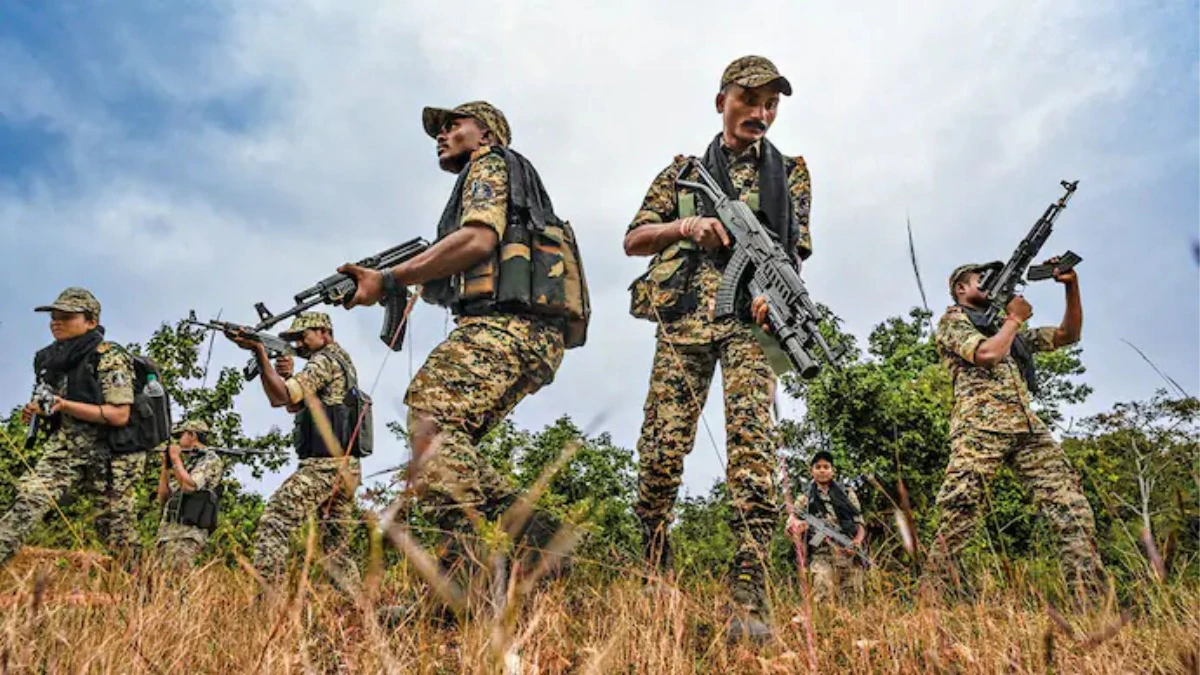
The Union Home Minister’s announcement on achieving the goal of “Naxal Mukt Bharat” by March 31, 2026, signalled more than political intent. It reflected the confidence and willingness to take one of its longest and largest internal security challenges headlong. This goal has been nearly achieved, largely because of security measures. The challenge now is to ensure that it does not rise like a phoenix some years later.
For decades, Naxalism posed a serious challenge across large tracts of central and eastern India. At its peak between 2004 and 2011, the insurgency spread across tribal and forested regions stretching from Bihar and Jharkhand to Maharashtra, Chhattisgarh, Telangana, Andhra Pradesh, Odisha and parts of Uttar Pradesh and Madhya Pradesh. Violence became routine and civilians were killed, terming them as informers. Violence also meant living in constant fear and lack of development.
To recap briefly, a major turning point in the Naxal movement came in 2004 when the People’s War Group and the Maoist Communist Centre of India merged to form the CPI (Maoist). The merger strengthened the insurgency’s leadership, recruitment, coordination, and military capability. Entire districts gradually came under Maoist influence. Roads, schools, public health centres, communication infrastructure and police stations became regular targets. In many remote tribal regions, the state’s presence was weak, while the Maoists projected themselves as an alternative authority.
Today, however, the situation has changed significantly.
The geographical spread of the insurgency has reduced sharply, and levels of violence have declined phenomenally. This transformation is the result of sustained efforts by the central and state governments, security forces, intelligence agencies, and local administration. At the same time, the Maoist movement itself has suffered from leadership losses, severe attrition, ideological depravity, insurgency fatigue, declining public support and years of continuous operational pressure.
Yet, despite these gains, the country’s leadership must avoid the mistake of believing that military success alone guarantees permanent peace. The next phase of the strategy cannot remain security-centric alone. Development and good governance should take precedence.
Naxalism: Cycles of Rise, Suppression, and Resurgence
History offers an important warning. Since the Naxalbari movement of 1967, Maoist violence in India has repeatedly gone through cycles of ‘rise, suppression, and resurgence’. Whenever governance weakened, development failed, or local grievances remained unaddressed, extremism found space to return. That is why the real challenge begins after violence declines.
Even today, remnants of Maoist groups retain the ability to carry out sporadic attacks. Hidden weapons and Improvised Explosive Devices continue to remain a threat in areas such as South Bastar, especially Bijapur, and Gadchiroli. Underground financial networks, safe havens, and urban support structures may also survive in limited forms. Security agencies therefore need to coordinate with the intelligence agencies with patience, while also ensuring that surrenders are encouraged and rehabilitation policies are implemented sincerely, speedily and effectively.
The central lesson from decades of insurgency is simple: people rarely turn towards extremism because of ideology alone. More often, they are driven by neglect, exploitation, lack of opportunity, weak governance, and the feeling that the state is absent from their daily lives. In many tribal regions, the government was historically visible mainly through police action, forest restrictions, or land acquisition disputes, while basic services such as healthcare, schools, roads, banking, drinking water, and communication remained inadequate for decades.
Importantly, the causes of alienation have never been identical everywhere. In one region, displacement due to mining may be the core issue. Elsewhere, the grievances may relate to forest rights, corruption in welfare schemes, unemployment, exploitative local systems, or lack of medical facilities. This is why a single national template cannot solve deep local problems.
India’s future strategy must therefore focus on governance, trust-building, and accountability, alongside security measures, with a clear roadmap.
Immediate Outreach
The priority should be rebuilding trust between the state and local communities through regular and meaningful engagement. Village-level interactions involving district officials, tribal elders, teachers, health workers, women’s groups, and local youth must become institutionalised rather than symbolic exercises. People should feel that the administration is listening to them and responding within a reasonable timeframe.
Administrative responsiveness can often weaken insurgency more effectively than force. When grievances related to land disputes, ration cards, pensions, forest access, wages, healthcare, or connectivity are resolved quickly and transparently, public confidence in democratic institutions naturally grows stronger.
At the same time, visible improvements in daily life are essential. Roads, electricity, mobile connectivity, schools, healthcare centres, and clean drinking water are not merely development indicators; they are instruments of national integration. For villagers in places such as Gadchiroli, Sukma, Bijapur, Malkangiri, Koraput, Chatra, Hazaribagh, Latehar, Jhargam, or Purulia, the success of the Indian state will ultimately be measured not by policy announcements in Delhi, but by whether life becomes safer, easier, and more dignified.
Employment generation is equally critical. Young people without economic opportunities remain vulnerable to recruitment by extremist groups. Forest produce such as tendu leaves, bamboo, honey, lac, medicinal plants, and handicrafts offer considerable economic potential if supported through cooperatives, fair pricing systems, storage facilities, and assured market access. Gainful employment and economic dignity remain one of the strongest long-term counters to extremism.
Medium Term Focus
Land and forest rights also require urgent and sensitive attention. The Forest Rights Act of 2006 was designed to correct historical injustices faced by tribal communities. Yet implementation in several areas remains uneven and slow. Unless people feel secure about their land, forests, and livelihoods, mistrust toward state institutions will persist. Pending claims must therefore be resolved transparently, while Gram Sabhas should function as genuine decision-making bodies rather than administrative formalities. Development and mining projects must also ensure fairness, consultation, and proper rehabilitation.
Education, perhaps more than any other measure, can transform the future of these regions. In many insurgency-affected districts, educational infrastructure remains poor or inaccessible. Investment in residential schools, digital learning, vocational training, scholarships, and skill development can fundamentally reshape the aspirations of tribal youth. Institutions such as Sainik Schools and Navodaya Vidyalayas can serve as important bridges between remote communities and the national mainstream.
Infrastructure development must continue with equal urgency. Roads, bridges, railways, banking access, internet connectivity, and telecommunications not only improve economic activity but also strengthen the visible presence of the state. Connectivity reduces isolation, improves governance delivery, generates economic activity, and creates opportunities that weaken extremist influence over time.
Long Term Measures and Institutional Accountability
Most importantly, governance must not fade once violence declines. That has been one of the major lessons from counter-insurgency campaigns across the world. Security forces can create conditions for peace, but only responsive governance can sustain it.
India therefore needs transparent systems to ensure that promises translate into visible outcomes. Real-time monitoring, social audit, field inspections, and public accountability mechanisms are essential. People judge governance through everyday realities: whether teachers are present in schools, whether ration shops function properly, whether health centers operate regularly, and whether roads promised on paper actually exist on the ground.
The reduction in violence is real and encouraging. But the final victory against Naxalism will not be measured merely by the absence of armed cadres in forests. It will be measured by the presence of justice, opportunity, dignity, and trust in the lives of ordinary citizens living in some of India’s most neglected regions.
The battle today is no longer only about defeating insurgents. It is about ensuring that the conditions which once allowed extremism to grow are never permitted to return. A truly “Naxal Mukt Bharat” will be achieved not only through security operations, but through responsive governance, economic inclusion, institutional accountability, and the confidence of the people themselves.
– Ends