




5 min readNew DelhiAug 7, 2026 09:56 AM IST
The stench of wet sludge hung in the air outside Govindpuri Metro station on Thursday as commuters stepped around heaps of freshly-dredged muck from a roadside stormwater drain, hours after heavy morning showers lashed Delhi and prompted the India Meteorological Department (IMD) to issue a red alert across most of the Capital.
With 56 mm of rainfall recorded at Safdarjung – the base station for Delhi – as of Thursday night, the city has received 67.8 mm of showers, nearly 29% of its total normal August rainfall of 233.1 mm, as per the IMD.

Throughout the day, contractual sanitation workers remained bent over open drains, loosening compacted silt with iron rods before lifting it out with a shovel, as fresh rainfall carried silt, debris and waste into the drainage system.
The Public Works Department (PWD) had earlier said that it had completed nearly 90% of the annual desilting exercise across its road network before the onset of monsoon.
Govind from Uttar Pradesh, who was clearing a drain near the Govindpuri Metro station, said, “We have been doing this for months, but the workload increases during the monsoon. Even when it is raining, we are outside clearing the drains. People throw garbage into them, which blocks the flow and makes our work harder.”
Govind and many like him were carrying out the work without any personal protective equipment.
Meenu, who runs a roadside stall near the Metro station, said drain cleaning is a regular exercise in the area. “Workers keep coming here, but during the rainy season, they come more often because the drains fill up quickly.”
Story continues below this ad
Standing nearby, Mahesh, a contractual sanitation worker from Madhya Pradesh, said every spell of rain brings fresh deposits into the drains. “Rain washes mud, garbage and construction waste into the drains. If roads are not cleaned properly, we have to keep returning to clear them so they don’t choke and cause waterlogging,” he added.
According to Govind, similar teams of four to five workers have been deployed along the stretch from Chirag Delhi to Govindpuri to carry out desilting and drain-cleaning operations through the monsoon.
A senior PWD official, requesting anonymity, told The Indian Express that “removing sludge is a continuous process”. “During rain, construction debris, sludge and sewage enter the drainage system. Even after scheduled desilting is completed, workers have to continue removing these deposits manually to keep drains functional,” the official added.
According to PWD, as of July, 1,900.15 km of drains – around 90% of its 2,125.87-km network – had been desilted. It also removed around 12.7 lakh metric tonnes of silt from the Najafgarh drain – the largest component of the exercise – before the June 30 deadline to complete major pre-monsoon desilting across civic agencies.
Story continues below this ad
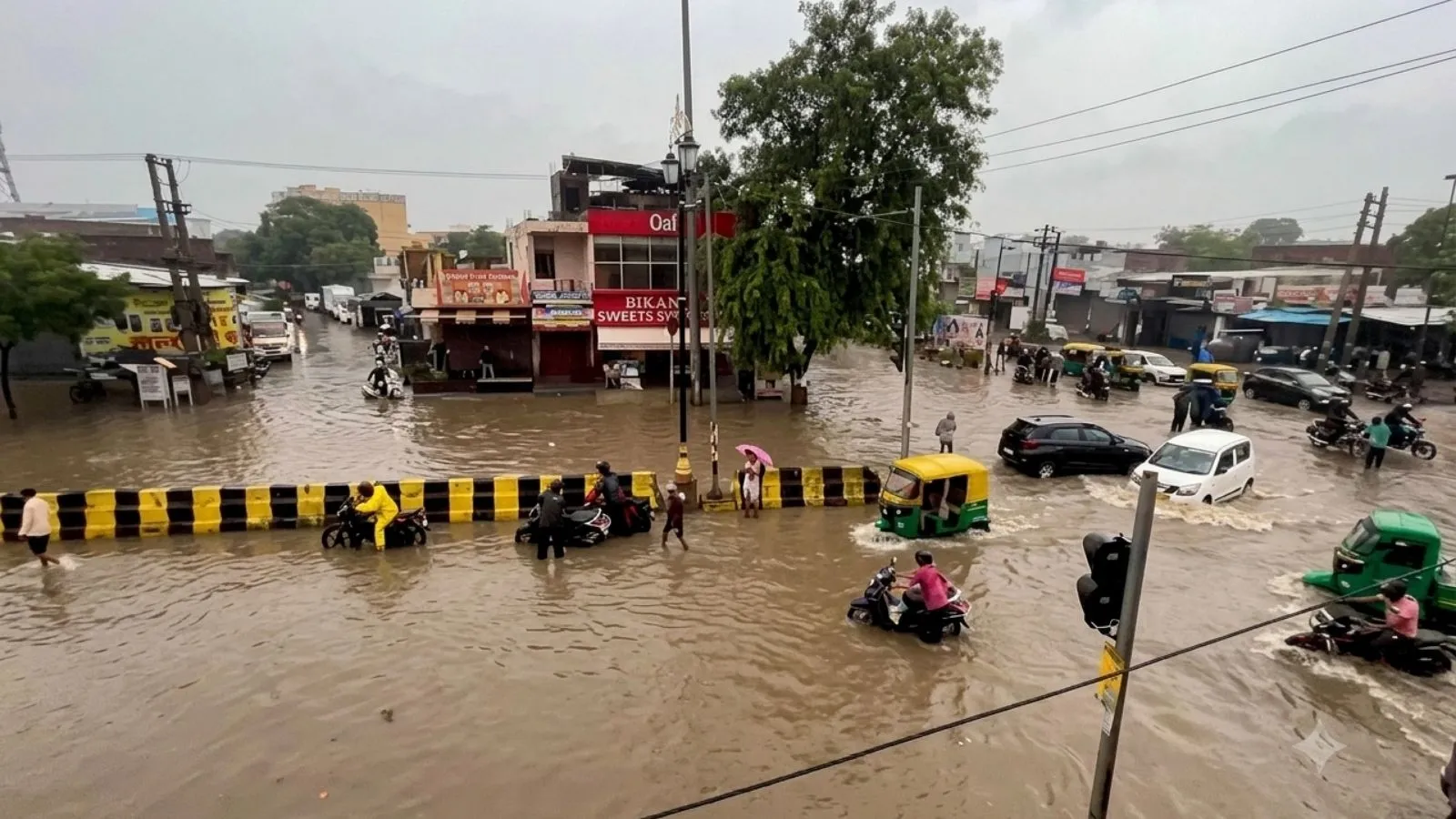
Despite the pre-monsoon exercise, Thursday’s rain led to brief waterlogging at vulnerable locations, including the Modi Mill flyover underpass near Okhla in Southeast Delhi and Bhairon Marg along the Outer Ring Road in Central Delhi, slowing traffic.
Earlier in the day, the IMD issued a three-hour red alert for East, Shahdara, Central, Northeast, South, New Delhi, Southwest, West, Northwest and North Delhi, warning of heavy rain accompanied by thunderstorms and lightning. The remaining districts remained under an orange alert.
The city had received light to moderate rainfall over the previous 24 hours, with Lodhi Road recording the highest rainfall (43.8 mm) until 8.30 am Thursday. It was followed by KVK CRPF Campus (28.5 mm), Narayana (27.5 mm), Palam (25.2 mm) and Safdarjung (18.7 mm).
The rain also brought temperatures down, with Safdarjung recording a maximum of 32.6°C, 1.6°C below normal while the minimum settled at 25.6°C, 1.3°C below normal.
Story continues below this ad
The IMD has forecast generally cloudy skies with intermittent rainfall over the coming days, with a yellow alert in place for Friday.
Dr Nitin Bassi, Fellow and lead of the Sustainable Water Programme at the Council on Energy, Environment and Water (CEEW), said Delhi needs to move beyond reactive responses to urban flooding.
“Recurring waterlogging highlights the need to move beyond reactive responses towards strategic, risk-based urban flood planning. While intense rainfall over short periods is a growing challenge, its impacts are exacerbated by inadequate drainage capacity, poor solid waste management, and encroachment on floodplains. Adopting a risk-based approach can help Delhi identify flood-prone hotspots, strengthen early warning systems and protect blue-green infrastructure while reducing disruption for residents,” he said.

Stay updated with the latest – Click here to follow us on Instagram